
What are my limitations after Dallas Mommy Makeover? Dr. Sam Jejurikar at the Dallas Plastic Surgery Institute

What are my limitations after Dallas Mommy Makeover? Dr. Sam Jejurikar at the Dallas Plastic Surgery Institute

It is common for patients to negotiate an appropriate level of activity after undergoing tummy tuck, breast augmentation, liposuction, or any other combination of surgeries that make up a Dallas mommy makeover.  The thought is, if they can convince me that they need less time to recover than other patients, somehow the surgery will be lessened in magnitude, or that they will be able to recover more quickly after the procedure.

Childbirth takes a dramatic toll on the female body.  To reverse those changes with a mommy makeover, significant surgery is involved.  With a Dallas tummy tuck (abdominoplasty), in addition to removing skin, extensive sculpting of the waist and upper abdomen is performed with liposuction, and the muscles of the abdominal wall are significantly tightened.  Undue straining for a period of time after surgery can disrupt the sutures, and lead to a less then desirable postoperative result.  In addition, straining after surgery can cause problems with wound disruption and bleeding, not to mention prolonged swelling in the abdomen, breasts, and lower extremities.

I usually recommend that my patients take 1-2 weeks off of work after surgery.  Some patients will take less time and others more, depending on the level of physical exertion required at their work place.  I also strongly advise my patients to refrain from any vigorous exercise for 6-8 weeks after surgery.  Although it is important to walk almost immediately after surgery to prevent blood clots and respiratory problems, too much activity can lead to infection, bleeding, and wound healing problems.

Ultimately, to get the best result after mommy makeover, a patient has to allow herself the appropriate amount of time to recover.  Should you have any questions, please do not hesitate to contact Dr. Jejurikar’s office at 214-827-2814.
One Day BOTOX Cosmetic and Juvederm Special – Wednesday, May 4, 2011 – Dr. Jejurikar at Dallas Plastic Surgery Institute

We’re having a very special event and you’re invited! Please join us on Wednesday, May 4, 2011 from 9 am to 5 pm at Dr. Jejurikar’s Dallas office for light refreshments and special savings on BOTOX and Juvederm! For one day only, Dr. Jejurikar will be injecting BOTOX at $10.50/unit (minimum purchase of 20 units, normally $15/unit) and Juvederm for $525/syringe (minimum purchase of 1 syringe, normally $700/syringe). At the end of the day, two drawings will be held for a free treatment with BOTOX, up to 50 Units (must be redeemed by September 15, 2011; prize is nontransferable, with patients eligible for winning one treatment only). Two patients will win a future free treatment with BOTOX!

Patients who sign up their friends will be eligible for more opportunities to win a free treatment with BOTOX. Each additional friend signed up will be good for one additional entry for a free BOTOX treatment. The winners will be notified via telephone the following day.
Space is limited! Patients will be eligible for these savings by appointment only, so call 214-827-2814 to reserve your time today!

Dallas Lip Augmentation with Restylane – Dallas Plastic Surgery with Dr. Sam Jejurikar

Restylane is a hyaluronic acid filler, which is commonly used, in noninvasive cosmetic procedures.  Hyaluronic acid is one of the most common components of human skin.  Filling agents utilizing hyaluronic acid therefore feel natural with virtually no allergic reactions.

Restylane is the one of the most frequently used fillers and is commonly used as to augment lips.  Medicis, the company that distributes Restylane, recently made some improvements to the product. First, they have introduced a larger (2 mls) syringe, which can allow patients wanting significant lip augmentation to do so at a lesser cost. Second, the company has introduced Restylane with lidocaine, which is a local anesthetic designed to limit patient discomfort during the procedure.

Other than bruising and minimal discomfort with the procedure, there are minimal side effects with Restylane lip augmentation.  The results typically last from 6-12 months.

To learn more about noninvasive lip augmentation, including its risks and recovery, don’t hesitate to contact Dr. Jejurikar’s office at the Dallas Plastic Surgery Institute or at Legacy Medical Village in Plano at 214-827-2814.

Will medical insurance cover the costs of rhinoplasty in Dallas? Dr. Sam Jejurikar, board certified plastic surgeon of the Dallas Plastic Surgery Institute, Discusses Rhinoplasty (Nose Reshaping) Surgery.

Rhinoplasty, or nose reshaping surgery, can be performed for many reasons, but most commonly is done to improve appearance, improve breathing, or after an accident or trauma.  Although specific medical insurance policies vary, many medical insurance plans will cover some of the costs of nasal surgery if it can be documented that it is being done for functional reasons (i.e. to improve breathing). Any aspect of the procedure done to improve appearance, however, including reshaping of the tip, removal of a hump, narrowing of the nose, etc., generally is not covered by these same insurance policies.

To learn more about rhinoplasty, including its risks and recovery, don’t hesitate to contact Dr. Jejurikar’s office at the Dallas Plastic Surgery Institute or at Legacy Medical Village in Plano at 214-827-2814.

Liposuction for Weight Loss? Are the Results Good? Dr. Sam Jejurikar, Board Certified Plastic Surgeon in Dallas

It is not uncommon to have patients come in seeking liposuction for major weight loss.  It is important to clarify with these patients, and to the general public, that liposuction is not a great option for weight loss.  Liposuction gives much better and more predictable results for patients close to their ideal body weight who are looking to sculpt their body. 


If a considerable amount of weight loss is required, other surgical options are better.  Specifically, bariatric procedures, including LAP-BAND, gastric bypass, gastric switch, etc.  These procedures allow for much greater and predictable amounts of weight loss, which then can be followed by body contouring surgery to help sculpt the body. 


If you have any questions about body sculpting or body contouring surgery, please contact Dr. Jejurikar at the Dallas Plastic Surgery Institute at 214-827-2814. 

What are the benefits of Breast Reduction? Board-Certified Dallas Plastic Surgeon Dr. Sam Jejurikar Discusses Breast Reduction Surgery

Women with large, droopy breasts causing pain, discomfort or social embarrassment usually are great candidates for breast reduction (reduction mammaplasty). Patients oftentimes complain that they have difficulty finding appropriate-fitting bras and have difficulty exercising due to their large breast size. Although breast reduction is generally recommended for women with fully developed breasts, surgery may be performed on teenagers if their breasts are causing serious pain and physical discomfort.

Breast reduction involves making incisions to remove breast tissue and to perform a breast lift. The incisions vary for each patient, but commonly involve an incision around the areola (pigmented skin around the nipple) and a vertical incision below this. In some cases, an incision in the crease below the breast is also needed.

In exchange for these scars, which tend to fade considerably over 1-2 years, patients can achieve smaller, perkier breasts with relief of their back, neck and shoulder pain. Patients usually report an easier time shopping for bras after surgery and a greater ability to exercise.

To learn more about breast reduction surgery, including its risks and recovery, don’t hesitate to contact Dr. Jejurikar’s office at the Dallas Plastic Surgery Institute or at Legacy Medical Village in Plano at 214-827-2814.

What Is Capsular Contracture After Breast Implant Placement? Dr. Sam Jejurikar, Board Certified Dallas Plastic Surgeon

Capsular contracture can be a relatively common complication after placement of silicone breast implants or saline breast implants. Scar tissue normally forms around breast implants in all circumstances. In some cases, over time, it can tighten and compress the implant, making it feel firm and painful, causing what is called a capsular contracture. Capsular contracture is more common following infection, hematoma, or seroma, and the chance of it happening may increase over time. It occurs more commonly in revision breast augmentation than in primary breast augmentation.

Capsular contracture is also a risk factor for implant rupture, and is the most common reason for re-operation after breast implant placement. Symptoms of capsular contracture can range from just mild firmness and discomfort, to severe pain, distorted appearance of the breast, and the ability to feel the implant. It is classified into 4 levels, depending on its severity:

Baker Grade I: The breast is soft, and looks natural.

Baker Grade II: The breast is a little bit more firm, but looks normal.

Baker Grade III: The breast is firm and looks abnormal.

Baker Grade IV: The breast is hard, painful, and looks abnormal.

The data for both silicone and saline breast implants says that about 1 in 6 women will develop a severe capsular contracture, either grade III or IV, through 7 years after breast implant placement. For women receiving revision breast augmentation, this risk increased to about 1 in 5. When pain and firmness or abnormal appearance is particularly severe, additional surgery may be required. This usually requires removal of the breast implant capsule and replacement of the breast implant.

Should you be developing firmness, hardness, or distorted appearance after your breast implant placement, you may have a capsular contracture. To learn more about this condition, please contact Dr. Jejurikar at 214-827-2814, at the Dallas Plastic Surgery Institute.

FDA offers new warning about breast implants and cancer – Dr. Sam Jejurikar, Dallas Plastic Surgeon, Discusses the Significance

Yesterday, the Food and Drug Administration (FDA) issued a warning that silicone and saline breast implants may be associated with a rare form of cancer. The cancer, known as anaplastic large cell lymphoma (ALCL), has been found in 34 women with breast implants. ALCL has been found in the capsule surrounding the implant, but not the breast tissue itself. The FDA concluded that there may be a link between breast implants and ALCL after examining scientific literature that described ALCL in 34 women with breast implants, as well as data from national and international regulatory agencies, scientific experts, and breast implant manufacturers.  In most cases. ALCL was found years after breast implant surgery.

It is estimated that 5-10 million women worldwide have breast implants. With only 34 cases of ALCL described, it’s impossible to say at this time that breast implants cause ALCL. Even though the risks of getting ALCL with breast implants, if real, are exceedingly small, given that the usual incidence is around 1 in 500,000, it’s important to investigate this matter more thoroughly. To that end, the FDA and the American Society of Plastic Surgeons (ASPS) are establishing a registry of ALCL patients who have breast implants. FDA scientists hope the registry yields enough information to better understand what the risks for developing ALCL are for women with breast implants.

Ultimately, what’s a patient to do? If the risk of getting ALCL from breast implants is real, it is exceedingly small.  Says Caroline Hove, spokesperson for Allergan in an article from the Wall Street Journal, “”A woman is more likely to be struck by lightning than get this condition.” That being said, ALCL has the potential to be fatal; the informed patient should be aware of this very small but possibly significant risk associated with breast implants.

What’s the Earliest Age to Consider Having a Dallas Face Lift or Mini Face Lift? Dr. Sam Jejurikar at the Dallas Plastic Surgery Institute

Many patients like to pose the question, “Am I ready for a facelift?”  The truth is that there is no good answer to this question.  Face lift is an elective procedure.  It is particularly good at treating hollowing of the cheeks, prominent nasolabial folds (parenthesis deformity), jowls, and general heavy facial sagging.  The invasiveness of the procedure usually correlates to the amount of deformity that a patient has.  Specifically, patients in their early 40s are oftentimes good candidates for minimally invasive face lifts, which would involve a short scar and less manipulation of the deep tissues of the face.  More advanced facial aging oftentimes requires a full face lift, with extensive treatment of the neck and more extensive reshaping of the deeper soft tissues.  The amount of swelling with both procedures can range anywhere from 10-21 days, and has much to do with a patient’s intrinsic physiology.

The bottom line is, if you are motivated to undergo a more permanent correction of your facial aging, it may be an appropriate time to consider facial cosmetic surgery.  If you are not motivated, noninvasive treatment with products such as Botox, Dysport and facial fillers, including Juvéderm, Restylane, and Radiesse, may be a better option.

Ultimately, if you have questions about treatment to reverse the signs of facial aging, your best bet is to seek consultation with a board certified plastic surgeon.  If you would like to contact Dr. Jejurikar, please call his office at 214-827-2814.

Botox and Dysport for an edge in the Dallas workplace – Dr. Sam Jejurikar, Dallas plastic surgeon

With the economic recession in the United States, more people are working longer and are seeking an advantage for maintaining a youthful appearance in the work place.  Although this may not improve one’s job performance, many times, particularly when looking for new employment, a competitive advantage can be obtained by looking more refreshed and more youthful.  In the last year, it has become apparent that Botox and its competitor, Dysport, are being performed with more and more frequency for precisely this purpose.  These treatments help eliminate dynamic wrinkles, particularly crow’s feet around the eyes, frown lines between the eyebrows, and lines across the forehead.  With relatively simple and quick office injection of Botox or Dysport, wrinkles can disappear within just a matter of days.

The cost of Botox and Dysport varies, depending on the amount of product used and the areas treated.  In general, patients can expect to pay between $350-$700 per treatment. Results generally last from 3 to 6 months.

Should you have questions about this procedure or other noninvasive procedures to gain a competitive advantage in the workplace, do not hesitate to contact Dr. Jejurikar’s office at 214-827-2814.  Dr. Jejurikar is a board certified plastic surgeon with convenient office locations in Dallas and Plano.

Contact

Contact

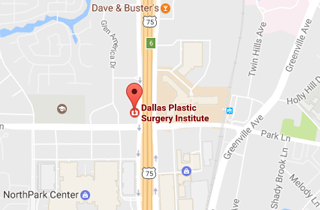
Our Location Dallas Plastic Surgery Institute

9101 N. Central Expwy.
Suite 600, Dallas, TX 75231
Tel: 214-827-2814
Dallas | Dr. Jejurikar

Stay Connected

Ready to get started?
Request a Consult