Natural Breast Augmentation, Planned Around You
Whether you want fuller, more proportionate curves, want to restore volume after pregnancy or weight loss, or want to correct asymmetry, breast augmentation can help you feel at home in your body again. As a board-certified plastic surgeon who has performed breast augmentation in Dallas for more than 20 years, I plan every operation around your measurements, your tissue and the result you have in mind. This page walks you through everything we will discuss at your consultation: implant choices, incision options, where the implant sits, Preservé, anesthesia, recovery and what goes into the cost.
Breast Augmentation Before and After Photos
Every patient below was treated by me in Dallas. The captions tell you the implant, the size and where it was placed, because those three decisions are what shape the result. Click any case to see the oblique and side views.
Natural and proportionate
Smaller implants, chosen to fit the frame rather than fill it.


See all views


See all views


See all views


See all views


See all views


See all views
Fuller results
Larger implants, still sized to the width of the chest so they look like they belong.


See all views


See all views


See all views


See all views


See all views


See all views
Asymmetry, support and combined techniques
When the two sides start out different, or the tissue needs help holding the implant, the plan changes.


See all views


See all views


See all views


See all views
See the Full Gallery
Browse dozens more breast augmentation results from my Dallas practice. Individual results vary.
The Truth About Breast Implants
Motiva, silicone and saline, what social media gets wrong about implants, and what patients should really know before choosing one. A candid conversation from my podcast with Dr. Sal Pacella.
Also worth a listen: The Truth About Preservé Breast Augmentation and Why Secondary Breast Operations Are So Common.
What Is Breast Augmentation?
Breast augmentation uses an implant, and occasionally your own fat, to increase breast size and improve shape, fullness and balance. It is one of the most commonly performed cosmetic operations in the United States, and after 20 years of performing it in Dallas I still consider it one of the most satisfying operations in plastic surgery when it is planned carefully. It is a good fit for women who:
- Want fuller, more proportionate curves
- Have lost volume after pregnancy, breastfeeding or weight loss
- Have a noticeable difference in size or shape between the two breasts
- Have constricted or tuberous breasts that never fully developed
- Are healthy, do not smoke, and have realistic expectations
What it does not do is lift. If your nipples sit below the breast crease, an implant alone will make the breast bigger but not higher, and we should talk about a breast lift or augmentation with a lift instead. I will tell you honestly which one you need.
Your implantChoosing the Right Breast Implant
Implant choice is one of the most important decisions you will make, and I offer all three major options so the implant fits you rather than the other way around. Every implant I use is FDA approved and smooth surfaced.
Motiva
FDA approved in 2024 after years of use worldwide. The Ergonomix gel is soft and moves with you, taking a teardrop shape when you stand and rounding out when you lie down. The SmoothSilk surface has very low rates of capsular contracture and rippling. Available in Mini, Demi, Full and Corsé projections. Learn more
Smooth silicone
The workhorse of modern augmentation, backed by decades of clinical data. Today’s cohesive “gummy bear” gels hold their shape, feel natural and come in a wide range of base widths and profiles, from low to extra high, so I can match the implant to your chest. Learn more
Saline
A silicone shell filled with sterile salt water after it is placed, which allows a slightly smaller incision and is safely absorbed if the implant ever leaks. Saline feels firmer and can show rippling in thinner patients, so I recommend it selectively. Learn more
Size, profile and shape
Patients usually arrive thinking in cup sizes. Surgeons think in cubic centimeters, base width and projection, because that is what determines whether an implant looks natural on a particular chest. At your consultation I measure the width of each breast, the thickness of your tissue, the distance from nipple to crease and how much your skin will stretch. Those numbers narrow us to a range of implants that will fit your frame. Within that range, profile decides how much the implant projects forward: a moderate profile gives a softer slope, a high profile gives more forward fullness from the same base width.
I also use Crisalix 3D imaging so you can see a simulation of different sizes on your own body before we decide, and sizers in the operating room so the final choice is confirmed on your actual anatomy. Nearly all of my patients choose round implants; the newer cohesive gels and Motiva Ergonomix implants give a natural teardrop look when you are upright without the rotation risk of a shaped implant.
IncisionsBreast Augmentation Incision Options
There are three places an implant can be inserted, and each leaves a scar in a different location. I will recommend the one that gives you the most control over your result, but the final decision is yours.
| Incision | Where the scar sits | What you should know |
|---|---|---|
| Inframammary (breast crease) | In the fold under the breast, about 3 to 5 cm long | My preferred approach for most patients. Gives the most direct access to the pocket, the lowest rates of capsular contracture, no disruption of the breast ducts, and the scar is hidden in the crease once healed. |
| Periareolar | Along the lower edge of the areola, at the border between dark and light skin | Heals very well in most patients and is useful when a small lift of the nipple is needed at the same time. Passes through breast tissue, so there is a slightly higher chance of changes in nipple sensation or difficulty breastfeeding. |
| Transaxillary (armpit) | In a natural crease of the armpit | Leaves no scar on the breast. Performed with an endoscope. Best suited to saline or smaller silicone implants, and less precise for shaping the lower pocket, which is why I reserve it for selected patients. |
Scars from all three approaches fade significantly over 12 to 18 months. I close every incision in layers with absorbable sutures and start a scar protocol in the office once the skin has healed.
PlacementWhere the Implant Is Placed: Subglandular, Subfascial or Subpectoral
Where the implant sits in relation to your chest muscle has more influence on how the result looks and feels over the years than almost any other decision. There are three planes, and I use all of them, chosen for your tissue rather than habit.
| Best for | Key advantages | Trade-offs | |
|---|---|---|---|
| Subglandular (behind the gland, above the muscle and its fascia) | Patients with plenty of natural breast tissue, or who need the implant to fill a slightly loose skin envelope | No muscle involvement, so the least pain and fastest recovery. No animation deformity when the pectoralis contracts. Implant sits naturally in the breast footprint. | Less tissue over the implant, so edges or rippling can be more visible in thin patients. Historically higher capsular contracture rates, now much lower with modern smooth and SmoothSilk implants. |
| Subfascial (above the muscle, beneath its fascia) | Fit patients, athletes and anyone with good tissue coverage who wants to avoid the muscle | The thin, strong fascia layer gives extra support and a smoother upper edge than subglandular placement. No animation deformity, less pain, quicker recovery, and the implant does not get pushed down or out by the muscle over time. | Requires good native tissue thickness. My most common choice for Motiva implants. |
| Subpectoral / dual plane (under the muscle) | Thin patients, patients with very little breast tissue, and those who want the most coverage over the upper edge of the implant | The muscle camouflages the implant and softens the upper slope. Lowest rippling visibility. Easier mammography. | More soreness for the first week. The implant moves when the muscle contracts (animation), which bothers some patients, particularly those who lift weights. Over many years the muscle can displace the implant downward and outward. |
| Preservé (behind the gland, tissue-preserving technique) | First-time patients wanting a natural, moderate result with the quickest recovery | About a 3 cm incision, no muscle cut, no-touch implant delivery, minimal tissue disruption. Many patients are back to normal activity within days. | Designed for moderate implant sizes and patients with adequate tissue. Not a fit for every anatomy. See below. |
Dual plane deserves a word because it is what most surgeons mean when they say “under the muscle.” The upper part of the implant sits beneath the pectoralis and the lower part sits behind the gland, which gives coverage up top while letting the lower breast expand naturally. When your tissue calls for extra support, in any plane, I may also use an internal bra, an absorbable mesh scaffold that reinforces the lower pole so the result you leave with is the result you keep.
Preservé Breast Augmentation
Preservé is a tissue-preserving approach to breast augmentation built around Motiva implants. Rather than creating a large pocket with electrocautery, the surgeon makes an incision of roughly 3 centimeters, develops a precise pocket just large enough for the implant with minimal cutting of tissue, and delivers the implant through a no-touch funnel. The muscle is never divided. Because so little tissue is disturbed, there is less bleeding, less swelling, less pain and a much faster return to normal life. Most of my Preservé patients are off prescription pain medication within a day or two and back to desk work and light activity within a few days.
Preservé is not the right operation for everyone. It works best for first-time augmentation patients with reasonable natural tissue who want a natural, moderate increase in size. It is not designed for very large implants, significant sagging, constricted breasts or revision surgery, and in those situations one of the other techniques above will give you a better and more durable result. I am one of a small number of Dallas surgeons performing Preservé, and because I also perform every conventional technique, I have no reason to steer you toward it unless it is the best choice for you.
Read more about Preservé breast augmentation, or listen to the Preservé episode of my podcast linked above.
AnesthesiaAnesthesia for Breast Augmentation
All of my breast augmentations are performed in a fully accredited surgical facility with a board-certified anesthesiologist dedicated to you for the entire operation. The type of anesthesia depends on the technique we choose together.
General anesthesia
For subpectoral, dual plane and most subfascial augmentations, general anesthesia is the standard. You are completely asleep and comfortable, the muscle is fully relaxed, which matters when the implant sits beneath it, and the anesthesiologist controls your airway and breathing throughout. Modern agents wear off quickly, and most patients are awake, alert and on their way home within an hour or two of finishing.
Local anesthesia with IV sedation
Because Preservé disturbs so little tissue and never involves the muscle, the operation can be performed under local anesthesia with intravenous sedation rather than full general anesthesia. The surgical field is numbed with long-acting local anesthetic while sedation keeps you relaxed and unaware. The benefits are real: no breathing tube, less nausea, a quicker wake-up and often less grogginess that afternoon. For patients who are anxious about general anesthesia, this is one of the strongest arguments for Preservé.
Whichever approach we use, I infiltrate the pocket with long-acting local anesthetic at the end of surgery so you wake up comfortable, and my protocols are built to minimize opioid use. The decision between general anesthesia and sedation is made jointly by you, me and the anesthesiologist based on your health history and the plan, never by default.
Surgery dayWhat to Expect During Your Procedure
You arrive at the surgery center about an hour before your scheduled time. I mark the planned incisions and pocket boundaries with you standing, since the breasts look different lying down, and we confirm the implant plan one last time. Breast augmentation itself usually takes about an hour. After the incision is made, I develop the pocket in the plane we chose, confirm symmetry with sizers if needed, irrigate the pocket with an antibiotic solution and place the final implant using a no-touch technique so it never contacts the skin. The incision is closed in layers beneath the skin, with no external stitches to remove. You go home the same day with a soft support bra, written instructions, a direct line to my team and a follow-up visit within the first week.
RecoveryBreast Augmentation Recovery Timeline
Recovery depends heavily on technique. Implants placed above the muscle, and Preservé in particular, recover noticeably faster than implants placed beneath it. The timeline below is typical for a conventional augmentation; Preservé patients are generally a few days ahead at every step.
How Long Breast Implants Last
Breast implants are not lifetime devices, but they are far more durable than most patients expect. Many women keep their original implants for 15 to 20 years or longer with no problems. The reasons implants are eventually replaced are usually a change in the breast rather than a failure of the implant: pregnancy, weight change and aging alter the tissue around it, and some patients simply decide they want a different size. The rare device problems, rupture and capsular contracture, are less common with today’s cohesive gels and smooth surfaces than they were a generation ago. If you ever do need a revision or decide on implant removal, I perform both regularly. The best way to avoid a second operation is a carefully planned first one.
InvestmentWhat Goes Into the Cost of Breast Augmentation in Dallas
The question I am asked most often by email is simply “how much?” The honest answer is that breast augmentation in Dallas is quoted as a package, and the number varies from patient to patient because the components vary. When you receive a quote from my office it is an all-inclusive figure with no surprises afterward, and it is built from the following parts.
- Surgeon’s feeReflects the surgeon’s training, experience and time. Board certification by the American Board of Plastic Surgery and a long track record with this specific operation are worth paying for; a revision costs far more than the difference.
- Implant costThe single biggest variable. Saline implants are the least expensive, smooth cohesive silicone sits in the middle, and Motiva implants carry a premium that reflects their technology and warranty. Asymmetric sizes or specialty profiles do not usually change the price.
- Anesthesia feeCharged by the anesthesiologist based on the type of anesthesia and the length of surgery. Sedation for Preservé is typically shorter and lighter than general anesthesia.
- Facility feeCovers the accredited operating room, nursing staff, equipment and recovery room. Longer or combined operations cost more here.
- Technique and added supportPreservé involves specific instrumentation and implants. An internal bra adds the cost of the absorbable mesh. Hybrid augmentation adds the fat transfer portion of the operation.
- Combined proceduresAdding a breast lift, or combining augmentation with a tummy tuck in a mommy makeover, increases surgical time and therefore the surgeon, anesthesia and facility components, though usually less than doing the operations separately.
- Pre- and post-operative careMy quote includes your pre-operative visit, 3D imaging, surgical garments, all routine follow-up visits for the first year and the scar care we start in the office. Lab work and a mammogram, when indicated, are billed separately.
Breast augmentation for cosmetic reasons is not covered by insurance. We work with several financing partners and my patient coordinator will walk you through the options. Be cautious of quotes that are dramatically lower than the Dallas market: they usually exclude the implant, the anesthesia or the facility, or reflect a surgeon who is not a board-certified plastic surgeon operating in an accredited facility.
SafetyAre Breast Implants Safe?
When performed by a board-certified plastic surgeon using FDA-approved implants in an accredited facility, breast augmentation has one of the longest safety records in all of surgery. Like any operation it carries risks, and I discuss every one of them with you. The ones that come up most are capsular contracture (tightening of the scar tissue around the implant), rippling, changes in nipple sensation, and the possibility of a future revision. Two further topics come up in nearly every consultation.
Breast implant illness (BII). Some patients report symptoms such as fatigue, joint pain or brain fog that they attribute to their implants. Research has not established that implants cause these symptoms, and studies are ongoing. I keep up with the evidence and will discuss it openly with you, and I perform implant removal for patients who decide that is right for them.
BIA-ALCL. This rare lymphoma has been linked almost entirely to textured implants, which I do not use and which are no longer sold in the United States. I use smooth and Motiva SmoothSilk implants, all FDA approved.
Augmentation, Lift, or Fat Transfer?
An implant adds volume and improves shape, but it does not lift a breast that has descended. If your nipples sit low or your breasts have stretched after pregnancy, weight loss or aging, a breast lift alone or augmentation with a lift may give you a better result. For women who want a modest increase, roughly half to one cup size, without an implant, fat transfer to the breast is an option, and I frequently combine a small amount of fat with an implant in a hybrid augmentation to soften the upper edge or fill the cleavage. I will measure and examine you and recommend the approach that fits your anatomy and your goals.
The differenceWhy Choose Dr. Jejurikar for Breast Augmentation in Dallas?
- Every major implant option. Motiva, smooth silicone and saline, sized to your measurements with 3D imaging.
- Every major technique. Subglandular, subfascial, subpectoral and Preservé, chosen for your tissue rather than habit.
- Built to last. Internal bra support when your anatomy calls for it, and a planning process designed to make your first operation your only one.
- Natural, proportionate results. An augmentation that looks like it belongs to you, in and out of clothes.
- Board certified, 20+ years in Dallas. American Board of Plastic Surgery certified, president of Dallas Plastic Surgery Institute, peer reviewer for Plastic and Reconstructive Surgery, and recognized by Castle Connolly, Texas Monthly Super Doctors and D Magazine.
- A team you can reach. You will have my patient coordinator’s and my nurse’s direct contact information from your first visit through your last follow-up.
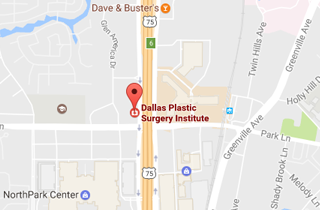
My practice is located at Dallas Plastic Surgery Institute on North Central Expressway, minutes from Highland Park, University Park, Lakewood and Uptown, and convenient to patients from Plano, Richardson, Frisco and across North Texas. Out-of-town patients can begin with a virtual consultation; see our location and directions.
QuestionsBreast Augmentation FAQ
How much does breast augmentation cost in Dallas?
Breast augmentation is quoted as an all-inclusive package made up of the surgeon’s fee, implant cost, anesthesia, facility fee and follow-up care. The implant you choose and whether any additional technique or procedure is added are the main reasons quotes differ from patient to patient. You will receive an exact, personalized quote at your consultation. The cost section above explains each component.
How do I choose my implant size?
We use your chest measurements, tissue thickness and goals to narrow a size range at consultation, review simulations with Crisalix 3D imaging, and confirm the final size with sizers in the operating room. Implants chosen within the width of your natural breast look the most natural and age the best.
Subfascial vs. subpectoral: which is better?
Neither is better for everyone. Subpectoral placement gives more coverage for thin patients but involves the muscle, so recovery is slower and the implant moves when you flex. Subfascial placement avoids the muscle, recovers faster and has no animation, but requires enough natural tissue to cover the implant. I examine your tissue and recommend the plane that fits it.
Which incision leaves the least visible scar?
For most patients the inframammary (breast crease) incision heals into a thin line hidden in the fold. The periareolar incision also heals very well because it sits at a natural color border. The armpit incision leaves no scar on the breast at all, but gives less control over the pocket.
Am I a candidate for Preservé?
Preservé is best for first-time augmentation patients with reasonable natural tissue who want a natural, moderate increase in size and the quickest possible recovery. It is not suited to very large implants, significant sagging or revision surgery. I will tell you at your consultation whether it fits your anatomy.
Can breast augmentation be done without general anesthesia?
Yes, in selected cases. Preservé is routinely performed under local anesthesia with IV sedation because it does not involve the muscle and disturbs very little tissue. Conventional augmentation, especially beneath the muscle, is performed under general anesthesia with a board-certified anesthesiologist.
How long is recovery from breast augmentation?
Most patients return to desk work in three to five days, resume light exercise at two weeks and are cleared for all activity by six weeks. Implants placed above the muscle, and Preservé in particular, recover faster. Final results are seen at three to six months once swelling resolves and the implants settle.
How long do breast implants last?
Many implants last 15 to 20 years or more, but no implant is a lifetime device. Regular checkups are recommended, and the FDA recommends periodic imaging for silicone implants. Most replacements are done because the breast has changed with time, not because the implant has failed.
Will I be able to breastfeed?
Most women can breastfeed after augmentation, especially when the incision is placed in the breast crease and the implant sits beneath the muscle or fascia, away from the ducts. We will discuss your plans at consultation.
Do breast implants affect mammograms?
You can still have mammograms with implants. Tell the technologist you have them so additional displacement views can be taken. Implants placed under the muscle interfere the least with imaging.
What is the difference between augmentation and a lift?
Augmentation adds volume; a lift raises the nipple and reshapes breasts that have descended. Many women benefit from combining both in a single operation.
Can I combine breast augmentation with other procedures?
Yes. Breast augmentation is commonly combined with a breast lift, liposuction or a tummy tuck as part of a mommy makeover. Combining procedures means one recovery and usually a lower total cost than separate operations.
Related Pages
Schedule Your Breast Augmentation Consultation
Every plan starts with an unhurried, one-on-one consultation where we review your goals, take measurements and choose the right implant, incision and technique together. Meet in person in Dallas or by virtual visit.
Schedule a ConsultationCall (214) 827-2814Dr. Sam Jejurikar is a board-certified plastic surgeon at Dallas Plastic Surgery Institute, 9101 N. Central Expressway, Suite 600, Dallas, TX 75231. This page is for education only and is not a substitute for a consultation. Individual results vary.