Pregnancy, breastfeeding and weight loss do two things to the breast at once: they drain the volume and they stretch the skin. An implant alone fills a deflated breast but does not raise a nipple that has dropped. A lift alone raises and reshapes but does not restore fullness. When you have lost both, breast augmentation with lift, or augmentation mastopexy, addresses both in one plan.
Why This Is the Hardest Operation in Breast Surgery
A lift tightens the skin envelope. An implant stretches it. Doing both at once means asking the same tissue to do two opposite things, which is why augmentation mastopexy has one of the highest revision rates in cosmetic breast surgery. I tell every patient this at the first visit. It does not mean the operation should be avoided. It means it has to be planned carefully, with a conservative implant, the right lift pattern for your anatomy and, sometimes, two stages instead of one.
One Stage or Two?
Most of my patients have the lift and implants in a single operation. When the breast tissue is thin, the nipple sits very low, or a large implant is wanted, I often recommend staging: the lift first, then the implant three to six months later once the tissue has settled. Two operations sounds like more, but for the right patient it produces a more predictable shape, a safer blood supply to the nipple and a lower chance of needing a revision later. We decide this together after I examine you.
Choosing the Implant
With a lift, smaller is usually better. A moderate implant restores upper fullness and projection while letting the lift hold its shape; a very large implant fights the lift and stretches the result out over time. I use Motiva implants for most augmentation mastopexies because their softness and low capsular contracture rate suit a reshaped breast, and I preview sizes with you using 3D imaging. In patients with thin tissue after weight loss, I may add an internal bra of absorbable mesh to support the lower breast and keep the implant from drifting.
Which Lift Pattern?
The incision follows the same logic as a breast lift alone. A circumareolar (donut) lift suits mild drooping and leaves only a scar at the edge of the areola. A vertical (lollipop) lift handles moderate drooping. An anchor lift adds an incision in the crease for significant sagging or major weight loss. The implant adds fullness that often lets me use a shorter pattern than a lift alone would require.
Breast Augmentation With Lift Before and After Photos
Four of my patients, covering a single-stage anchor lift, two circumareolar lifts and a two-stage approach. Click any photo to see every angle in the gallery.


Hear Me Talk Breast Surgery on Beauty and the Beasts
On the Beauty and the Beasts podcast, On Beauty and the Beasts I talk about why secondary breast operations are so common and how to plan the first one to avoid them, how a lift with implants fits into a mommy makeover, and what has changed with implants.
What to Expect
Augmentation mastopexy is an outpatient operation under general anesthesia, usually two to three hours. You will go home the same day in a soft surgical bra. Most patients return to desk work within a week and to full exercise at four to six weeks. The breasts sit high and feel firm at first and settle over three to six months. Scars are pink for several months and fade over the first year.
I use a non-opioid pain protocol, so most patients manage comfortably without narcotics, and I offer hyperbaric oxygen therapy at Foundry Hyperbaric and Wellness to speed healing in the first weeks.
Am I a Candidate?
You are likely a good candidate if your breasts have both dropped and lost volume, your nipples sit at or below the breast crease, you are at a stable weight, you do not smoke, and you are finished having children and breastfeeding. If you are taking a GLP-1 medication or are still losing weight, we will time surgery for when your weight has settled.
Augmentation With Lift FAQs
Can I get big implants with a lift? You can, but I will usually talk you out of it. The larger the implant, the more it works against the lift and the more likely you are to need a revision. A moderate implant with a well-done lift looks fuller than you expect.
Will I lose nipple sensation? Temporary changes are common and most sensation returns over several months. The risk is somewhat higher than with either operation alone, which is one reason I stage some cases.
Can I breastfeed afterward? Many women can, but it cannot be guaranteed. If you plan more children, I generally recommend waiting.
How long will the result last? Years, often decades. Gravity continues, and a future pregnancy or large weight change can stretch the result. Keeping the implant moderate is the single best way to make it last.
I already have implants and now I need a lift. Is that different? Yes. Implant exchange with a lift is a revision operation and has its own considerations. See Secondary Breast Surgery.
Is this part of a mommy makeover? Often. Augmentation with lift is the most common breast component of a mommy makeover, combined with a tummy tuck.
Breast Surgery Patient Reviews


Recognition
Newsweek has named Dr. Jejurikar one of America’s Best Plastic Surgeons for five consecutive years. He has been named to D Magazine’s Best Doctors in Dallas and Texas Monthly Super Doctors for many years running.
Schedule Your Consultation in Dallas
If your breasts have dropped and deflated and you want both fixed, I would like to examine you and talk through the plan that fits your tissue, in one stage or two. Call 214-827-2814 or request a consultation online.
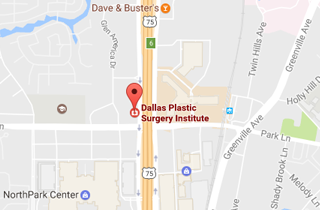
Dallas Plastic Surgery Institute
9101 N. Central Expressway, Suite 600
Dallas, TX 75231
Tel: 214-827-2814