Unpacking the Art of Liposuction: A Conversation with Dr. Christopher Costa
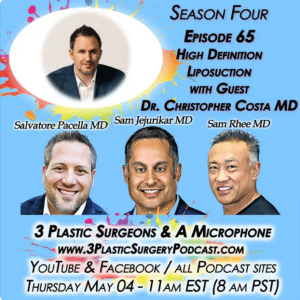
Welcome to our podcast where we bring you the minds that are moving and shaking the world of plastic surgery. As always, I’m your host Dr. Sam Jejurikar, accompanied by my esteemed colleagues, Dr. Sam Rhee from Paramus, New Jersey, and Dr. Sal Pacella, who joins us from sunny La Jolla, California. Today, we have an exciting episode in store for you. We’re thrilled to be joined by a special guest, Dr. Christopher Costa, a leading aesthetic surgeon hailing from the bright lights of Las Vegas. Today, we’ll delve into the fascinating and transformative realm of high-definition liposuction. So, buckle up and let’s get started. But first, let’s pause for our obligatory medical disclaimer with Dr. Pacella.
Dr. Sam Jejurikar: Well, good morning, everyone. Welcome to another edition of Three Plastic Surgeons and a Microphone. As always, I am joined by Doctor Sam Rhee and Bergen County, New Jersey. Got him. Paramus, New Jersey. Sorry. Doctor Sal Pacella in La Jolla, California, who’s at San Diego Plastic Surgeon, and today, we have the great fortune of being joined by Doctor Chris Costa, who’s an incredibly busy aesthetic surgeon in Las Vegas. Before we get into the program meeting and introduce Doctor Costa, we’ll just do the necessary disclaimer. Pacella.
Dr. Sal Pacella: Alright, here we go. This show is not a substitute for professional medical advice, diagnosis, or treatment. This show is for informational purposes only. Treatment of results may vary based on the circumstances and situation of medical judgment. After appropriate discussion, always seek the advice of your surgeon or other qualified health provider with any questions you may have regarding medical care. Never disregard professional medical advice or delay seeking advice because of something.
Discussing Dr. Costa’s Expertise in High-Definition Liposuction
Dr. Sam Jejurikar: Great. So, for our listeners, I’ve had the great pleasure of knowing Doctor Costa for many years as a Doctor Pacella. I’ve seen Chris since he was a resident of Southwestern; back then, it was clear that he had a great eye and mind for all things aesthetic surgery. I kept in touch with him over the years, and he shared his philosophy with me. I’ve really been struck by one; the results I see online are fantastic in many different procedures, whether plastic, liposuction, body contouring, or breast surgery. He seems to do a great job with all of that stuff. But he’s had an evolution. He’s done some things that are philosophies of what I do and many others. But his results speak for themselves; they are so awesome to sort of keep up. So, what we’ve decided would be a great topic for today is high-definition liposuction because every time I go onto Chris’s social media, I see yet another amazing result after another amazing result. And so, Chris, I guess for our listeners out there, first of all, love the show.
Dr. Christopher Costa: Yeah, thanks.
Dr. Sam Jejurikar: Second, what is high-definition liposuction? The next term is being banded around a lot.
Dr. Christopher Costa: Right, I know that’s like all the buzz on social media now. I think no matter where you turn; everyone is saying high def, high def, high def. What I classify as high-definition liposuction is, it’s we’re doing more than removing. So, from the traditional sense of liposuction, where your mom’s liposuction from 10, 20 years ago or whatever, it’s just like the focus really was on volume, right? Just get the vote, and then you fit into your genes, and there’s nothing wrong with that. The term high-def kind of comes into play is where we look more at your natural anatomy and the contours that you already have and just kind of bring them out and tell the story that you’re trying to tell people on the outside, right? So, like all plastic surgeries, but like the people who do really, really well are obviously it’s like the people who are in the gym 3 to 6 days a week, and they’re just like, man, I just can’t get any sort of like result just because of genetics or whatever it is. So, just try and help bring that out for me.
So, there are varying degrees, right? Because, like, the person who maybe has a BMI of like 20 and works out all the time. They’re going to be coming to me with different expectations than somebody who had two kids and they just want their old form back. You know what I mean? So, it’s always a conversation, and there are varying degrees. Most of my patients come to me ironically, saying, hey, I just don’t want a six-pack or anything crazy like that, right? Like they just, people just want to look natural, right? So, I think we use high def because, like, people know now what’s out there, and they know what that term means. But it’s just about like all necessary whether you’re doing rhinoplasty or breast augmentation. Like the goal is to make people’s heads turn and be like, whoa, they look awesome, right? Not necessarily like, whoa, that’s some plastic surgery. Like that’s always the goal whether we’re doing body contouring or tummy tuck or breast or nose, face, for all of us, right?
Dr. Sam Jejurikar: Right. I think you get on a couple of really good topics. One is natural. Sounds like more of your patients are interested in looking natural and fit as opposed to looking like they have crazy six-packs. I assume you’re talking predominantly about women when you say that.
Enhancing Body Contouring Through Improved Patient-Surgeon Dialogue
Dr. Christopher Costa: Yeah. Exactly. It definitely is different in the male population but to a certain extent, right? Like I did a man in his 60s actually last week, and he was a physician. He bikes. He’s an avid biker, and he had two orthopedic injuries last year where he was basically, you know, immobilized and not able to like to get into shape, and now, he was like, man, like, I’m 60, whatever. I can’t, no matter what I do, like I just can’t get any definition back that I had before. And he’s like, I’m not trying to like to look like Captain America. I just want kind of my own old form back and somebody who can kind of make it look without making it look kind of like that Van Gogh painting where it’s kind of amorphous.
Dr. Sam Jejurikar: Yeah.
Dr. Christopher Costa: Something like that. So, for the most part, you probably like the same thing you guys see in your offices. Like anytime someone comes in for a breast augmentation. Well, I’m in Vegas, so maybe my patients are a little different than your guys’, right? As I know, my average size breast implant, maybe a little bit larger in Dallas. But the patients that come to me are all like; I love your results, just don’t make me look like I got two volleyballs in my chest. Like, don’t give me that plastic surgery look. So, it’s the same thing with lipo and all that stuff. So, I think that something when you’re trying to learn a technique in a new procedure, the pendulum can shift too far the other way, too, right? When you give the patient something, it crosses the line of natural-looking results, and now, they look over-operated or just over-resected or that kind of thing. So, it’s definitely tough. It’s definitely a balance. It’s taken a lot. Totally different from what I learned in training.
Dr. Sam Jejurikar: So, let’s walk through the process of a patient coming in for a high-definition liposuction consult. Guys, interject, as he has questions as well. So, let’s say you have three patients that are coming to you. One has a BMI of 20, one has a BMI of 25, and one has a BMI of 30, and they all tell me, Doctor Costa, I want to look athletic and natural. Does your conversation differ with those patients in terms of what the results might look like? Or is it the same conversation with all patients?
Dr. Christopher Costa: Yeah, I know. I think that’s really interesting because the way you’re asking that question kind of puts a lot in the context of, I think, the way a lot of plastic surgeons think about this and maybe even patients of like, oh well, if my BMI is this versus this. That’s a very structural way to think about patients. The way I have every single one of my body contouring consoles is, I say the equation to getting you the result you want has three different factors, okay? X, Y, and Z, alright? The first factor is muscle diastasis; if you have pregnancies, if all that is stretched out, I got to fix it. The second part is going to be your subcutaneous skin. If you’ve got, or I’m sorry, subcutaneous fat. If you’ve got a lot of fat, that’s where we make the little incisions, and I can suck it out. Then the third part, which I say is the most critical part of this whole thing, is your skin quality. If you have excess skin quality, skin damage, age of the skin itself, all that kind of stuff, and I tell people I’m like, of all of these factors, your skin is that’s the loose cannon. Like, that’s the one I can’t predict. That’s the one that I really define, like what type of result we can get you and that kind of thing.
Now luckily, most people are really reasonable, right? Like regular plastic surgery, the patient is just a regular person. It’s not somebody who likes what we see on TV unboxed and all this kind of stuff. It’s just like people who want to look better, like they just whatever. So, a lot of people get that. So, my conversation about whether Your BMI is 20 or 30 really comes down to me doing an exam and looking at your skin, right? Because I have had patients with BMIs of thirty for who I can get phenomenal results. And I’ve had patients with BMIs of 20 who have three kids, and I just tell them, like, look like we have to do a skin removal procedure. I think patients really get it when I kind of present it that way. Because if I just say like the liposuctions to treat fat. It doesn’t do anything for that third part of the equation. It doesn’t do anything for your extra skin, so we got to do a skin procedure if we’re going to treat your extra skin.
Now I have. I think one of the things that has really, really helped me move forward is I have a very low threshold to do some sort of skin excision. Like, I have a lot of tools in my tool belt where skin doesn’t necessarily have to mean it’s a full tummy tuck, right? It’s not like zero to a hundred. It’s maybe we’re just doing a little mini-C-section scar size-like skin removal to pull that skin tight and help distribute that fat nice and nice and evenly, right? One analogy I like is when we do liposuction, we leave the fat behind, right? And that’s the way it should be done. That’s the way you keep the tissue nice and healthy, but it’s kind of like taking a big bowl, a big heaping bowl of potato salad, okay? So, if you just scoop a bunch of potato salad in a bowl, it’s all chunky, and it looks like whatever, but if you get some saran wrap nice and tight and you just you stretch it over that top of the potato salad, it looks nice and smooth and contoured, right? So, I explain that to patients.
Decoding High-Definition Liposuction
Dr. Sam Jejurikar: It’s heavy-duty saran wrap you have here. Well, I’m just kidding.
Dr. Christopher Costa: It just flattens everything out of it. So, I’m open to suggestions if you got a better idea of how to do it.
Dr. Sam Jejurikar: No, I like that. I think that’s a great analogy. I’m just, you know. I am saran-wrapped potato salad. It never looks that smooth in my refrigerator. But anyway.
Dr. Christopher Costa: But I don’t even like potato salad. So, macaroni salad. I don’t.
Dr. Sam Jejurikar: But actually, I do want to follow up if that’s okay.
Dr. Christopher Costa: Yeah.
Dr. Sam Jejurikar: So yeah, I think you’re; I totally agree with your analogy, by the way. It makes total sense in terms of the skin losses. So, I get it. Someone that’s got really bad skin elasticity can talk him easily into doing a skin excision. I get if someone has really good skin elasticity, really that worried about being a plastic surgeon. What if someone’s kind of in that middle ground? They’re sort of, you can kind of tell their skin can loosen up a little bit, but they’re coming to you, and their skin’s not that loose yet until it. Is there any rolling for things short of doing a skin excision to tighten the skin, whether it’s radio frequency or any other sort of antibodies?
Dr. Christopher Costa: Yes, so and then, so I think, as I said, it all comes down to the skin. So, if I even have that premonition of the loose skin, I don’t; I’m not really sure. It says, right, like yeah, exactly like you said, Sam. There’re people on both sides, but most people are in the middle. Most people have had a kit. Most people have some degree of laxity, and so first of all, it’s just about like patient counseling, where I just tell people what like looks like. And to answer, as I promise you, I’m going to answer your question, but I really believe it’s not a one-way conversation of like this is how I decide it. It’s totally a two-way conversation. That is how you get happy patients for sure if you say, alright, here’s the deal. You got a little bit of skin. It’s kind of loose after I suck your fat, I think you may have a little bit of loose skin, but I don’t know because I don’t know, like everybody’s different. Your genetics, your things. I’m giving you my best guess.
If it were me, I would rather do a little bit of skin excision. Pull that skin tight so I make sure that we get a nice smooth contour. But if you are like just totally against that, and you’re okay with having a little bit of loose skin, and maybe the contour doesn’t look the same, or maybe you’ve got a little bit of that kind of thing. Then I’m okay doing that too. And I think, well, that is one thing that I was not taught in my training, and I don’t know if other programs do teach that or not. But like the way I was taught was like you really only do liposuction only on people with really, really good skin quality. Because those are the only people that are going to have really good results, and you, someone with a BMI of 32, should never really do liposuction because like they’re not going to have a good result. They’re going to end up with whatever.
I think that that is something that is just totally wrong because there are so many people out there who they’re not necessarily looking for these amazing sculpted super results, right? They just want to look better, and if you tell them like hey, you may have a little bit of loose skin. How do you feel about that? Oh, by the way, like, if you do like it, we can always come back and cut it off later if it really, really bugs you. A lot of people are like yeah, that sounds good, let’s do that, like, and then when they’re in my office, I say, it’s 50% get it, 50% end up healing really well. That’s why I say like I can’t even predict it because, like, sometimes I’m like, there’s this patient’s definitely going to need a mini tummy tuck, or a modified tummy tuck like with umbilical transposition, and then their skin just heals really well. So, I love radio frequency micro-needling; I’ll say that for those patients where I’m like, hey, I don’t know, so there’s a little insurance policy that we can do at the same time that will help us maybe get a little bit of skin retraction. I like incorporating that for those patients if they’re interested in it. But again, I just leave it up to the patient. I say like or/don’t. It’s really up to you.
Now if it’s very, very obvious the patient needs a tummy tuck, I’m going to, like, still tell them I’m going to still give them the same option. I think that’s also something that’s maybe kind of controversial, maybe not. But again, like, I can think of a patient with a BMI plus 35, and she just was like, listen, I can’t take the time off. I can’t. I just want to debulk, you know, and that’s the word I use. I say this is going to be more of a debulking procedure, right? And I’ll tell you, man, some of my happiest patients. They really are, and you know we can, we can still highlight, give them some contour, give them some of that shape back, and then those girls like love the results. Because they have always maybe been kind of like a larger woman, but now they’re like a really, really sexy larger woman, and then maybe they come back in a year, and they have the time to do the tummy tuck or whatever.
So, I really do think it’s like this sliding dynamic, and it’s hard to, like, create some algorithm in a paper of like, oh yeah, well BMI here do this procedure. BMI here does this procedure because it’s really not like it’s really not. It’s really like trying to figure it out. I know we always like, well, what are your goals? We tell we just ask the patient what’s your goals like, and we try to meet that, but like, I don’t know how much of us actually, really, really listen to that, right? Because, and the reason I point out is when I first started, like, got out on my own, I worked for Evol Corporate Plastic Surgery, okay? One of those places that do like liposuction on, okay? And when all you have is a hammer, everything’s a nail, right? So, everyone that walks through the door liposuction. That’s all they do. I was told like, hey, you got to do liposuction on this guy. Hey, you got to do liposuction on this woman. And I was like, man, this is totally different than what I was trained. This is a really bad thing. This goes against everything I’ve been taught that I’m supposed to do. This patient totally needs a big, extended tummy tuck with possibly whatever. But we would do these liposuction procedures, and again, if you talk to the patients and you kind of tell them what to expect down the road, they’re extremely happy. It’s way happier than I could have ever expected. I was like, oh my God, they’re going to hate me. They’re like, oh.
I also think that if you’re not somebody who doesn’t personally care about the feelings of others and stuff, you’re probably not going to be a good plastic trainer. But, like, you know what I mean? Like, you got to let your own conscious kind of guide you right like, and I’m like, look, I’m just going to lay it out for you, right? Like you still can be big after this, you’re still going to have loose skin like this is not like some crazy procedure, and they’re like, “Dude, I don’t care, I just want to like fit into my pants.” That was a bit like opening eye kind of thing for me when I did that because it really did show me that, like, we spend so much time saying, this is the right thing for you. Our science says this is the right procedure, and obviously, we have to present that to people like I’ve done this for a really long time, and I can tell you that this is probably not going to be the best result. But if that person also comes to you and says like, look, well, I can’t get three weeks off or two weeks off for a big mommy makeover procedure, and like, I just really want to get some of this off, so I can like to start walking again or start doing some exercises like that. Like, sometimes it’s just that’s the catalyst, right? I like to really get that going.
Dr. Sam Rhee: Well, I think that’s really important. I appreciate the fact that a lot of plastic surgeons impose their viewpoint or their opinions on what the aesthetic standard should be as opposed to presenting the options and letting the patient understand what those options would result in and then letting them choose what they know themselves to be their best result. Which I think sometimes a lot of plastic surgeons overlook in terms of always trying to achieve what we think would be appropriate. One of the questions I had for you, Chris, was about defining high-definition liposuction. So, as opposed to saying, like you said, your mother’s liposuction. What is it that makes it high definition?
Dr. Sam Jejurikar: Why do you guys keep talking about Pacella’s mom’s liposuction?
Dr. Sam Rhee: Dude. I was.
Dr. Sal Pacella: Oh, we’re going to start with the mom’s joke.
Dr. Sam Rhee: Dude.
Dr. Sam Jejurikar: Sorry.
Dr. Sal Pacella: Your mom…
Dr. Sam Rhee: So, if we could get on point, guys, the question is, is it picking the right patient, as you said, like a fit 60-year-old who’s looking to try to get back into shape? Is it doing more aggressive liposuctioning? So, you’re actually seeing the underlying musculature, or is it more of an etching where you’re sort of working a technique to highlight the anatomy better by a specific technique of liposuction?
Dr. Christopher Costa: Absolutely, all the above. So, when you’re saying like, well, what is, like, if someone comes in and says, am I a candidate for high-depth liposuction? I think that is kind of another way to rephrase it.
Dr. Sam Jejurikar: Like, how are you doing it? How do you?
Dr. Christopher Costa: Yeah.
The Interplay of Communication, Expertise, and Technology in High-Definition Liposuction
Dr. Sam Rhee: What makes it high definition regularly?
Dr. Christopher Costa: So, Hoyos wrote a paper a year or two ago, and he just came out with another one that’s like kind of similar where he basically kind of defines like the different degrees of definition. The way he kind of structured that paper, I think, is the way that I kind of talk to a lot of my patients. I don’t call people endomorphs or ectomorphs. What I just say, like number one, everybody is coming into my office for liposuction. I’m assuming they’re coming in because they’ve like seen my results and that they’re coming in because they want some degree of definition. So, it doesn’t matter if I’m doing a very obese person; I’m still going to try and get them some highlights in the linear Alba and the semi-linear lines, right? Like, I’m still the key, though, like, you can’t just draw them on, okay? You’ve got to look at the patient’s torso because someone who’s got a 40-inch circumference chest, their rectus muscles are just going to be wider. So, if you try and paint them on there, you would for a 5-foot-two petite Asian woman or something like it’s going to, it’s not going to work, right?
So again, like highlighting their natural anatomy, I have them literally stand and flex as I tell them I’m like flex like you’re trying to show me your abs, and I just push on them, and I try and feel where that is. So, it’s not like a stencil where you can just like to stick it on there and then like draw inside the lines, right? So, I think I can do these techniques in every single patient. Now if to that degree, if a patient who is, let’s just say, overweight with some loose skin comes to me and says, I’m looking for a high deaf result. I’m going to say, well, number one, like, what do you mean by that? Right? And have them show me some pictures and again, like when they show me those pictures, a lot of them are they’re showing me natural results. They’re not showing me the true high deaf etched out six pack, eight pack with serratus definition, and the external obliques coming off of the rib cage. That’s like an extremely high-def right, and that type of patient tends to be, yeah., it’s kind of self-selecting, right? Like that tends to be somebody who’s already in shape.
Dr. Sam Jejurikar: Can I ask you a question? Are you using traditional lipo and energy modality is power-assisted? Like how are you doing? How are you achieving different degrees of definition?
Dr. Christopher Costa: Alright. All the industry people hate me. Because I don’t believe that this, and I think this is super important for your audience to hear. Do not associate a result with a device. Okay? Whatever that device is out there like we get called old. At least a few times a week, asking, hey, do you guys have, oh, I saw Doctor Costa’s liposuction? Does he use the X for whatever device he is for? Does he do X? I’m not saying any names. You know what I mean? And that I’ve literally had to have hours of conversation coaching my staff on how to navigate that because your result is based on proximal to the instrument, right? So, if you put me in a pair of Air Jordans and make me play basketball against Michael Jordan in flip-flops, he’s still with me, pretty hard, right? Like it’s not the device. It’s not the shoe. It’s the surgeon.
Dr. Sam Rhee: It’s always the surgeon.
Dr. Christopher Costa: And from the surgeon’s standpoint, it’s again, like if you’re a surgeon, there are so many people who, like I saw during training, and I’ve seen just out in the community who they go through the steps, and then they’re done and never sit there and like critically analyze their own result on the table. Like it’s just like, well, I did it, the fats in the canister, we’re done. Like yeah, I got three liters of fat out, like what, that’s a great endpoint. And at no point are they actually looking at the patient, feeling the patient doing a skin pitches test like feeling to make sure that that contour is nice and even, right? So, do we have those devices? The answer is yes, and I do use them when appropriate, but I don’t necessarily think that any device actually makes the surgeon. Ironically, so like I have two micro heirs in my office because I do a lot of awake liposuctions. And the reason I have two micro heirs is that the pieces interchange; you can take the tip-off, right? And I can fit it in my tabletop autoclave. That’s the only reason I have it.
Dr. Sam Jejurikar: Okay.
Dr. Christopher Costa: That’s not because I feel like it’s a better thing.
Dr. Sal Pacella: Oh yeah. Just a question. Okay, so you mentioned very eloquently how you would talk to a patient. Your conversation is very two-sided, and you mutually decide on a procedure. So, let’s say, for example, you think the patient needs a more advanced procedure. Full tummy tuck liposuction, etcetera. The patient says, no, I can’t take the time off. I’m just going to do a little bit of skin incision. I’m not going to tighten up the rectus muscle; I want to do something that you feel is not necessarily the best. You do the procedure, and then they’re unhappy. How do you handle that?
Dr. Christopher Costa: So again, my experience has been that most people are reasonable and normal. Like most people are normal, right? So, I can have an unhappy patient, but if I sit with them and I say like yeah, remember we talked about all this? Like, that’s the loose skin that I was talking about, and remember how you said you couldn’t take two weeks off work? Oh yeah, okay, okay. Like most people get it. Like people are not dumb. Yes, you are there, the people out there who are just mean, angry people when they’re going to be met. Yeah, we try not to operate on those people. You know what I mean? And I think that’s a big key part if it’s not, if in that two-way, part of that two-way conversation is the patient interviewing me, but me interviewing the patient too is like does this person like get it, right? Like if they do not get it, the way I can tell a patient doesn’t get it is because they start trying to negotiate with me, right? Like, they start saying like, well, it’s like it’s one or the other. It’s either we cut the skin off, and I get you the best result, and we pull it tight, or we just do more of like a debulking procedure, and we try and get you smaller and just one step along the way.
Well, can’t you do that, Ian, get me the result that I, and like when I have that conversation, I’m like, we lay it out very, very clearly? No, it’s one or the other. It’s not both. And if I feel like they’re not getting it, I will then say, I don’t think it is probably the right procedure for you, or I don’t think I can get you the results that you want. You should maybe go see somebody else, but the advantage is I don’t know how long your guy’s consults are. I know you guys all do really, really good work, but there is that that is part of the advantages. I get to interview the patient also and make sure that they’re somebody who when they do come back, and they have that result at like we’re like 100% clear about what the goals and expectations were, and like I said, like no, most people aren’t going to like come after you because most people get it.
So, when that does happen, let’s just say it does happen. We’ve laid all the groundwork now to kind of lay that out to them, and the other thing that’s really nice is, like, I have lots of really, really great results on my website. But I have some results on my website that I kind of like hide at the bottom, okay? And the reason I hide them at the bottom is that they’re not the ones I really want to highlight, but they’re there in case I have somebody who, like, I feel like isn’t getting it. Because then I can show them, hey, this is somebody who should have gotten a tummy tuck, and I really recommended it to him. But they decided that they just want to do liposuction, and here they are, and you can see that they’re smaller, and they have that crepe-looking skin now, and this is their result. But they are super, super happy because I gave them like we had that conversation and we talked to them. And I said, so are you going to be happy if you get a result like this? Like, and that’s how I truly love, yeah.
Dr. Sam Rhee: You know what I love about that, Chris? The first thing is I think it is obvious for all of us as experienced plastic surgeons. It’s not about figuring out who to operate on. It’s figuring out what not to operate on, and the farther along you go, you figure that out, and you avoid these situations as best you can to make sure you’re a good match with the patient. The second thing I love about your answer is that you’re honest. You don’t just put everything that looks glam and awesome on there. You’re putting others.
Dr. Christopher Costa: All body shapes. Yeah.
Dr. Sam Rhee: Other results are that. Right, and to me, that’s the mark of a real Plastic surgeon, someone who’s very honest, who can show a variety of results and is not sitting there insecure about, like, oh, I only have to like to pretend that everyone is like a model an Instagram model that comes out of my practice. I think that honesty is something that I just thought about myself. Like, you know what? That I could probably take some lessons away from that myself.
Dr. Sal Pacella: And I think that brings.
Dr. Christopher Costa: I can’t tell you. Yeah.
Dr. Sal Pacella: I think that brings us to our last question, Chris. A very important question or no answer, okay? Okay. Does what happens in Vegas always stay in Vegas?
Dr. Christopher Costa: No. Yeah, really, not.
Dr. Sal Pacella: Yes, or no?
Dr. Christopher Costa: It definitely doesn’t, but I promise you if you come out, we’ll have a good time. We’ll have a good time for sure.
Dr. Sam Jejurikar: Chris, we really want to thank you for your time. I think you’ve hit some real points for our viewer’s high-definition liposuction is not one catch-all operation. It’s the surgeon that determines it. It’s not really how big you are. All of the various anatomic factors determine how great of a result you’ll get. So, thanks for illustrating those points and super, super instruct. We appreciate that.
Dr. Sal Pacella: Good seeing you guys.
Dr. Christopher Costa: Yeah, thanks. Hopefully, my perspective was refreshing a little bit. Just a reminder, yeah, I’m in Las Vegas Platinum Plastic Surgery. We just opened our new office with our new surgery center too. So, if you’re around, come check us out and see our new place, Sam.
Dr. Sam Jejurikar: Next time, I’m there for sure.
Dr. Christopher Costa: Yeah. Very cool.
Dr. Sam Jejurikar: Alright. Thanks again, gents.
Dr. Christopher Costa: Alright.
Dr. Sam Jejurikar: Take care. Thanks, Chris.
Dr. Christopher Costa: See you guys.
Dr. Sam Rhee: Thank you, Chris.


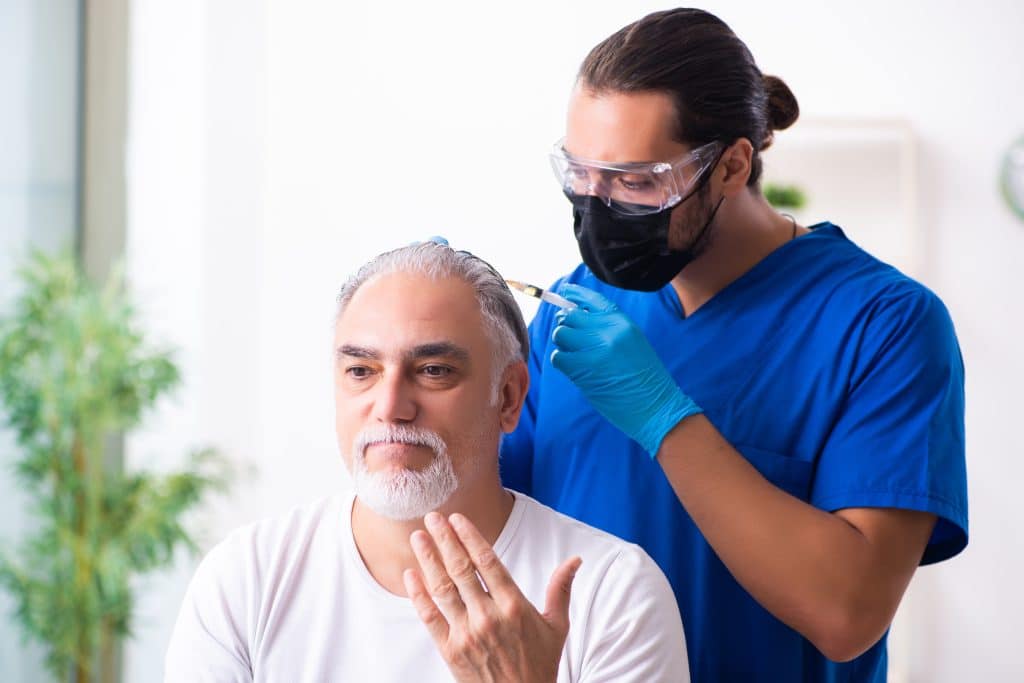 Kids who grew up in the ’80s are likely familiar with candy buttons — row after row of tiny candy dots stuck to a roll of paper you chewed off one at a time. Back in the day, that’s pretty much what hair transplants looked like, too — row after row of hairy, suspect-looking punctuation marks gathered in a dubious runway formation with embarrassing sections of scalp peeking through. While hair plugs were standard operating procedure in the last century, Dallas-based cosmetic surgeon