
Nipple Sensation and Breast Augmentation – Dr. Sam Jejurikar, Board Certified Plastic Surgeon in Dallas, TX

Nipple Sensation and Breast Augmentation – Dr. Sam Jejurikar, Board Certified Plastic Surgeon in Dallas, TX

Many patients complain of changes in nipple and breast sensation immediately after breast augmentation.  It is common for patients to complain that the breasts have a dull sensation, and, in rare situations, are hypersensitive.

The good news is that the changes in sensation, in most cases, are temporary.  It can take several months for the changes in sensation to resolve, but they do almost always improve.  There is a slightly greater chance of nipple numbness with an incision around the areola (pigmented skin surrounding the nipple) than with other incisions.

Should you have any questions regarding this or breast implant surgery, do not hesitate to contact Dr. Jejurikar’s office at 214-827-2814.
Compressive Garments After Liposuction – Are they Necessary? Dr. Sam Jejurikar at the Dallas Plastic Surgery Institute

After virtually all types of liposuction, patients are asked to wear compression garments.  The rationale for this is that it helps the swelling improve faster after surgery, thereby allowing realization of the postoperative result faster.  In addition, in many areas of the body, compressive garments actually help the skin’s natural elastic properties work better, and can actually promote better skin re-contouring.  This is particularly true in the chin and arms.

Most patients are more than anxious to get out of their compressive garment, as they complain about getting hot and sweaty, particularly during the summer months.  Nonetheless, failure to wear the compressive garments can affect the final postoperative results adversely.

Should you have any additional questions, please do not hesitate to contact Dr. Jejurikar at 214-827-2814.

Does Liposuction of the Arms Really Work? Dr. Sam Jejurikar at the Dallas Plastic Surgery Institute

Many patients complain about fat upper arms.  It makes clothing choices difficult, particularly when contemplating wearing anything sleeveless.  Many patients come in wishing to know which contouring procedure is best to create a youthful and slim arm.

It is important to differentiate between extra skin and extra fat of the upper arms.  Many arms have a selective excess of fat, and these patients are excellent candidates for liposuction alone.  Through very small incisions in the underarm and elbow region, the arm can be effectively contoured, and, with utilization of postoperative compression garments, very pleasing results can be noticed just a few weeks after the procedure.

Other patients, particularly those that have lost large amounts of weight, tend to have extra skin.  They need some type of additional procedure to remove the extra skin, known as a brachioplasty.  In some versions of this operation, incisions can be limited to just the underarm area.  In the most complete version of this procedure, an incision is made down the length of the arm, usually along the inner service.

Dr. Jejurikar’s goal is to minimize scarring while providing patients with the best postoperative result.

Should you like more information regarding liposuction or upper arm contouring, please do not hesitate to contact Dr. Jejurikar’s office at 214-827-2814.

Who Is a Good Candidate for a Mini Tummy Tuck (Mini Abdominoplasty)? Dallas Tummy Tuck Specialist Dr. Sam Jejurikar

Many patients come to the office inquiring about mini tummy tucks.  The rationale behind this is quite clear.  They would like a smaller scar, and believe that there is very little difference between a mini tummy tuck and a standard tummy tuck.

There are key differences between the operations.  In a mini tummy tuck, there is very little separation of the skin from the abdominal wall muscles, meaning that less skin can be removed.  In addition, there is usually no tightening of the abdominal wall muscles, particularly in the abdominal wall above the belly button.  Therefore, if a patient has upper abdominal bulging or fullness, a mini tummy tuck doesn’t correct it.  Finally, there is no reshaping of the belly button with a mini tummy tuck.

An advantage of a mini tummy tuck, however, is that, given there is less lifting of the skin from the abdominal wall muscle, liposuction of the entire abdominal wall and flanks can be performed much more extensively and much more safely.  This is because there is less chance of wound healing complications.

Ultimately, mini tummy tucks are best for women that have undergone pregnancy and have only small lower abdominal pooches and only minimal to moderate changes to their abdominal wall.  It also can be good for men who have lost large amounts of weight.  For women that have bulging of the upper and lower abdomen with significant excessive skin and stretch marks, a full tummy tuck is almost always a better option.

Should you have additional questions, contact Dr. Jejurikar at 214-827-2814.

Lip Augmentation with Juvederm -.Dallas Cosmetic Surgery with Dr. Sam Jejurikar

Juvéderm is a hyaluronic acid filler which is commonly used in cosmetic surgery procedures.  Hyaluronic acid, after collagen, is the next most common component of human skin.  Filling agents utilizing hyaluronic acid therefore feel natural with virtually no allergic reactions.

Juvéderm is the most frequently used dermal filler and is commonly used as a lip plumper.  Patients receive topical anesthesia with numbing ointment placed over their lips. In some cases, Dr. Jejurikar augments this with a series of lidocaine injections within the mouth to completely numb the lower one-third of the face.  Juvederm is then injected directly into the lips over a span of 10-15 minutes, creating full, plump lips immediately..

Other than bruising and minimal discomfort with the procedure, there are virtually no side effects with Juvederm lip augmentation.  The results typically last from 6-12 months.

If you would like more information about this procedure, contact Dr. Jejurikar’s office at 214-827-2814.

Minimizing Bruising after Juvederm and Restylane Injections Into the Lower Eyelids – Dermal Fillers at the Dallas Plastic Surgery Institute

Treatment of lower eyelid wrinkles and tear troughs with dermal fillers is a frequently performed procedure.  The most popular agents used for this are Juvéderm and Restylane, which are hyaluronic acid derivatives.  Restylane and Juvederm injections are performed in the office without the need for anesthesia.  Dermal filler injections are performed relatively quickly, in usually less than 60 minutes.  Results typically last 6-12 months.

Some patients are prone to bruising after Restylane and Juvederm injections into the lower eyelids.  To minimize the risks of bruising, patients should refrain from using alcohol, aspirin, ibuprofen, or any other blood-thinning agent for at least 10 days prior to dermal filler injections.  In addition, utilizing the over-the-counter herbal supplement Arnica Montana, either topically or in pill form, can help reduce post-procedure bruising.

If you have questions or would like to schedule a consultation, contact Dr. Jejurikar’s office at 214-827-2814.

Beware of Awake Breast Augmentation – Sam Jejurikar, M.D., Board Certified Plastic Surgeon

There are many advertisements on the internet for “awake breast augmentation”. Many of the surgeons that offer this procedure are not truly board certified plastic surgeons, and thus do not have privileges to perform breast augmentation or breast implant placement at an accredited surgical facility. For that reason, their only recourse is to perform the procedure in their office without general anesthesia.

Make sure that your provider is a board certified plastic surgeon. The process to achieve accreditation by the American Board of Plastic Surgery is quite rigorous, and you can be assured that a surgeon that has achieved these credentials has the necessary expertise and training to perform this operation. A variety of other doctors who have not achieved this presentation, may not even be plastic surgeons.

Should you have any additional questions, please do not hesitate to contact Dr. Jejurikar at 214-827-2814. Dr. Jejurikar is accredited by the American Board of Plastic Surgery.

What’s the Point of Muscle Plication (Tightening) During Abdominoplasty? Tummy Tuck Specialist Dr. Sam Jejurikar

Many patients ask if their muscles truly need to be tightened during a tummy tuck.  For most patients, the answer is yes.  After pregnancy or massive weight loss, many women develop a condition known as rectus diastasis.  With this condition, the midline vertical muscles that extend from the sternum and rib cage to the pubic bone, known as the rectus abdominis muscle, separate in the midline.  This leaves a gap that was not present before pregnancy or weight loss.  The gap is not indicative of muscle weakness, but it does lead to an abnormal bulge in the upper abdomen.  As well, it can contribute to an overhanging skin apron in the lower abdomen.

Because this is not indicative of muscle weakness, performing abdominal wall exercises to strengthen the rectus muscles do not considerably improve this.  The only true way to fix the abdominal bulging is to tighten these muscles by bringing them back together in the midline.  As of now, this can only be accomplished with surgery, with the placement of multiple sutures to restore the overall integrity of the abdominal wall.

Obviously, removal of skin and reshaping the belly button are also integral portions of an abdominoplasty (tummy tuck).  For most patients, however, failure to tighten the muscles of the midline abdominal wall would lead to less than optimal results.

For additional questions, please do not hesitate to contact Dr. Jejurikar via the web or via telephone at 214-827-2814.

What’s the Difference Between Closed Rhinoplasty and Open Rhinoplasty? Dr. Jejurikar at the Dallas Plastic Surgery Institute

The terms “closed rhinoplasty” and “open rhinoplasty” are thrown around frequently by plastic surgeons.  The difference between these two operations is actually quite small.  In an open rhinoplasty, an incision is made across the columella (base of the nose) and extended into the nostrils.  In a closed rhinoplasty, incisions are made just within the nostrils.  This is sometimes also called an endonasal rhinoplasty.  Thus, the only real difference between these operations is the presence of a very small scar across the base of the nose.

So, what are the implications for patients?  First, with an open rhinoplasty, visibility of the cartilaginous and bony portions of the nose is much improved.  This oftentimes allows surgeons to perform substantially more intricate work to the tip and base of the nose.  Because there is such greater visualization, and the skin is lifted much more during this procedure, swelling tends to be worse after this procedure and it can take longer to achieve the final result

The scar at the base of the nose tends to be forgiving and, in most patients, tends to fade considerably over time, to the point of being virtually unnoticeable.

Should you have any other questions regarding rhinoplasty, please do not hesitate to contact Dr. Jejurikar at 214-827-2814.

Do Breast Implants Rupture? Dallas Breast Augmentation Specialist Dr. Sam Jejurikar

Patients are obviously interested in knowing the likelihood of their saline breast implants or silicone breast implants rupturing. Although breast implants can remain intact for decades, all mechanical devices will fail at some point. When saline breast implants rupture, they deflate rapidly; rupture is usually easily detectable clinically. Studies of Allergan (Natrelle) saline breast implants showed rupture/deflation rates of 3–5% at three years and 7–10% at 10 years.

When silicone breast implants rupture they rarely deflate, and the silicone from the implant can leak out into the space around the implant over many years. It is often difficult to detect a rupture clinically. For that reason, the FDA recommends that patients undergo a screening MRI to look for rupture 3 years after placement of silicone breast implants, and then every 2 years thereafter. Rupture rates are thought to be similar between silicone and saline breast implants. It is reasonable to estimate the risk at approximately 1% per year.

Should you have more questions regarding breast implants or breast augmentation, contact Dr. Jejurikar’s office at 214-827-2814.

Contact

Contact

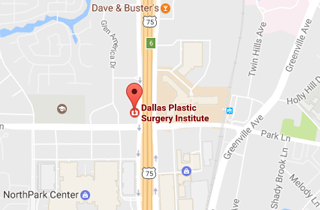
Our Location Dallas Plastic Surgery Institute

9101 N. Central Expwy.
Suite 600, Dallas, TX 75231
Tel: 214-827-2814
Dallas | Dr. Jejurikar

Stay Connected

Ready to get started?
Request a Consult