What’s the Difference Between Closed Rhinoplasty and Open Rhinoplasty? Dr. Jejurikar at the Dallas Plastic Surgery Institute

What’s the Difference Between Closed Rhinoplasty and Open Rhinoplasty? Dr. Jejurikar at the Dallas Plastic Surgery Institute

The terms “closed rhinoplasty” and “open rhinoplasty” are thrown around frequently by plastic surgeons.  The difference between these two operations is actually quite small.  In an open rhinoplasty, an incision is made across the columella (base of the nose) and extended into the nostrils.  In a closed rhinoplasty, incisions are made just within the nostrils.  This is sometimes also called an endonasal rhinoplasty.  Thus, the only real difference between these operations is the presence of a very small scar across the base of the nose.

So, what are the implications for patients?  First, with an open rhinoplasty, visibility of the cartilaginous and bony portions of the nose is much improved.  This oftentimes allows surgeons to perform substantially more intricate work to the tip and base of the nose.  Because there is such greater visualization, and the skin is lifted much more during this procedure, swelling tends to be worse after this procedure and it can take longer to achieve the final result

The scar at the base of the nose tends to be forgiving and, in most patients, tends to fade considerably over time, to the point of being virtually unnoticeable.

Should you have any other questions regarding rhinoplasty, please do not hesitate to contact Dr. Jejurikar at 214-827-2814.

Do Breast Implants Rupture? Dallas Breast Augmentation Specialist Dr. Sam Jejurikar

Patients are obviously interested in knowing the likelihood of their saline breast implants or silicone breast implants rupturing. Although breast implants can remain intact for decades, all mechanical devices will fail at some point. When saline breast implants rupture, they deflate rapidly; rupture is usually easily detectable clinically. Studies of Allergan (Natrelle) saline breast implants showed rupture/deflation rates of 3–5% at three years and 7–10% at 10 years.

When silicone breast implants rupture they rarely deflate, and the silicone from the implant can leak out into the space around the implant over many years. It is often difficult to detect a rupture clinically. For that reason, the FDA recommends that patients undergo a screening MRI to look for rupture 3 years after placement of silicone breast implants, and then every 2 years thereafter. Rupture rates are thought to be similar between silicone and saline breast implants. It is reasonable to estimate the risk at approximately 1% per year.

Should you have more questions regarding breast implants or breast augmentation, contact Dr. Jejurikar’s office at 214-827-2814.

Antibiotic Resistant Bacteria (MRSA) and Cosmetic Surgery – What You Need to Know. Dallas Plastic Surgeon Dr. Sam Jejurikar

Many patients have asked me about precautions I take to prevent infection in my cosmetic surgery patients.  As everyone knows, cosmetic surgery is completely elective; infections after any surgical procedure can cause significant complications.  It is therefore imperative to minimize the risks of infection.

Methicillin resistant Staphylococcus aureus, commonly referred to as MRSA, is becoming more prevalent in the community.  Several years ago, this antibiotic resistant bacterium was present only in hospitals.  Many healthy people are now colonized with MRSA. It can cause significant problems with delayed postoperative wound complications and infection.  For that reason, I routinely screen my patients for bacterial colonization with MRSA before any type of cosmetic surgery procedure.  Screening is done by performing a simple nasal swab and determining whether any resistant Staphylococcus aureus grows.

If patients have positive cultures, there is a simple decolonization protocol that is performed to reduce their risks of postoperative infection with MRSA. For five days, patients are asked to cleanse their body with 4% chlorhexidine solution.  It is applied in the shower every day, with care taken to focus on the underarms, groin, and into any folds of skin.  The antiseptic soap needs to remain on the skin for at least 5 minutes before it is washed off.  In addition, patients are asked to apply 2% Mupirocin (Bactroban) antibiotic nasal ointment inside the nostrils 3 times a day.

After this protocol, most patients have been effectively decolonized and can safely proceed with cosmetic surgery.

Should you have more questions regarding this or other cosmetic surgery procedure, contact Dr. Jejurikar’s office at 214-827-2814.

Male Breast Reduction Surgery Dallas – Dr. Sam Jejurikar Liposuction Specialist

Gynecomastia, or male breast development, is a common, yet embarrassing, condition for many men.  There is oftentimes a social stigma associated with gynecomastia, which limits clothing choices and can cause men to avoid removing their shirts in public.  Many men are too embarrassed to seek medical treatment for this condition.

Ironically, male breast reduction surgery is one of the most commonly performed procedures for men.  In the most common variety of this operation, ultrasound-assisted liposuction is used to remove excessive breast tissue and fat, to provide a flatter, less feminine contour to the chest.  In more severe cases, because of significant droopiness to the nipple and areola (pigmented skin around the nipple), incisions need to be made to remove extra skin.

Obviously, the goal with every patient is to provide the best cosmetic results with the least amount of scarring.  For that reason, every effort is made to achieve the final result with liposuction and utilization of a compression garment to facilitate postoperative skin shrinking.

If you have any questions, call Dr. Jejurikar’s office at 214-827-2814 to schedule a consultation.

Breast Lift Dallas – What Incision is Right for Me? Dr. Sam Jejurikar, Board-Certified Plastic Surgeon

Many women experience changes in the appearance of the breasts after massive weight loss, pregnancy, or breast-feeding.  Oftentimes, these women will come in for consultation, looking for either a breast lift or placement of breast implants.  It is important to realize that breast implants are primarily aimed at increasing lost volume in the breasts, particularly in the upper portion of the breasts, and have very little effect on sagging breast skin and on downward-pointing nipples and areolas.

For patients that do suffer from severe droopiness of the breasts, as well as sagging breast tissue, breast lift (mastopexy) tends to be the best option.  Oftentimes women are resistant to hearing this, as they do not want the scars that are associated with the operation.

There are a large variety of incisions that can be utilized for performing a breast lift.  In the most limited incision form of breast lift, known as a circumareolar lift or Benelli mastopexy, an incision is made just around the areola (the pigmented skin surrounding the nipple).  This operation is useful only for very mild forms of breast droopiness, and is best performed in combination with placement of a breast implant.  The reason for this is that be Benelli mastopexy does very little to restore lost volume in the upper portion of the breasts, which is usually seen in association with mild droopiness.  For mild forms of droopiness (ptosis), however, the performance of a Benelli mastopexy in combination with breast implants can lead to a very pleasing shape.

The next form of mastopexy is known as a circumvertical, or lollipop mastopexy.  In this form of breast lift, an incision is made around the areola, and a vertical incision is made from the areola along the middle portion of the breast to the crease at the bottom of the breast.  This is far and away the most common type of incision utilized for mastopexy.  This access allows the surgeon to reshape breast tissue, and place a large portion of breast tissue from the bottom portion of the breast into the upper pole of the breast, where breast volume is lacking.  It can be utilized for mild to severe forms of breast droopiness.  It can be performed in combination with either saline breast implant or silicone breast implant placement, but can also be performed without breast implant placement.

The last form of mastopexy is known as a Wise pattern mastopexy or anchor pattern mastopexy.  This involves an incision around the areola, a vertical incision from the areola to the crease at the base of the breast, and an incision along the very base of the breast.  This is the traditional type of incision utilized for mastopexy, and is most often reserved for patients that have lost massive amounts of weight, and have a severe amount of extra skin.  Like the lollipop mastopexy, it can be performed with or without the placement of breast implants.

If you have any questions, please do not hesitate to contact Dr. Jejurikar’s office at 214-827-2814.

Are your breast implants under warranty? Dallas Breast Augmentation Specialist Dr. Sam Jejurikar

Many patients ask me if their breast implants have any type of warranty. The answer is yes. Here are the details of Allergan’s ConfidencePlus® breast implant warranty program:

  • Lifetime Product Replacement – regardless of the age of the implant, Allergan provides product replacement in the event of a deflation or rupture
  • 10 years of guaranteed financial assistance
  • Up to $1200 in out-of-pocket expenses for surgical fees, operating room and anesthesia expenses not covered by insurance
  • Silicone filled and saline filled breast implants covered

If you’d like more information on breast augmentation in Dallas or Plano, or would like to schedule a consultation, please contact Dr. Jejurikar’s office at 214-827-2814.

Are there big differences in Botox and Dysport? Dr. Sam Jejurikar at the Dallas Plastic Surgery Institute

Facial injections with Botox and Dysport are becoming increasingly popular with patients because they can be administered in as few as 15 minutes, there is virtually no downtime, and results are apparent within just a few days. So are there significant differences?

To start with, there are more similarities than differences. Both are derivatives of Botulinum Toxin and paralyze muscle to smooth facial wrinkles. The costs are similar between the products.

In some patients, Dysport does last longer than Botox (4-5 months as compared to 3 months). The results often times are apparent more quickly, often times being seen in 24 hours, as opposed to 2-3 days with Botox. Both products work great on the forehead.  Dysport injections into the glabella (frown lines) must be performed carefully, as the product diffuses more than Botox and theoretically has a higher risk of causing eyelid ptosis (droopiness).

If you’d like more information, or would like to schedule a consultation, do not hesitate to contact Dr. Jejurikar’s office at 214-827-2814.

Facial Filler Treatments on the Upswing – Juvederm and Botox at the Dallas Plastic Surgery Institute

Despite the downturn in the economy and the nationwide drop in invasive cosmetic surgery procedures, an American Society of Plastic Surgeons survey of physicians found that minimally invasive procedures, such as facial injections of Botox, Juvederm, Restylane, Radiesse and Dysport, rose 6 percent this year.  Not only are patients finding these treatments to be less costly options to surgery, but are utilizing these treatments as an effective way to appear youthful in the work place.

Facial injections can be used to treat marionette lines around the mouth, smooth eyelid wrinkles, treat forehead wrinkles and frown lines, and treat early jowls. Results of treatments with Botox and Dysport generally last from 3-6 months, whereas those with facial fillers such as Juvederm, Restylane and Radiesse can last 9-18 months. These treatments can be performed with minimal to no downtime with results that are visible shortly after the procedure is performed.

For more information, call Dr. Jejurikar’s office at 214-827-2814 to set up an appointment.

Buttock augmentation – Brazilian Butt Lift at the Dallas Plastic Surgery Institute

Buttock augmentation with fat, or the Brazilian Butt Lift, is being performed with increased frequency. The concept is quite simple; patients undergo liposuction in various locations and the fat that is removed is then re-injected to create a fuller, shapelier buttock.

The most common sites for liposuction include the love handles, inner and outer thighs, abdomen and lower back. The fat that is removed is processed prior to reinjection to remove natural oils and serum. Even with this, the body reabsorbs some of the fat that is injected in the first few weeks after surgery. To compensate for that, if possible, Dr. Jejurikar overinflates the buttocks initially after surgery. To try to minimize the amount of fat reabsorbed, patients are asked to avoid placing any pressure on the buttocks for 10-14 days postoperatively. They are also asked to minimize sitting as much as possible and to pad the buttock while sitting for six weeks thereafter.

For more information, check out the photo gallery or contact Dr. Jejurikar’s office at 214-827-2814 to set up an appointment.

Tummy Tuck versus Liposuction – which is right for you? Dallas Liposuction Surgeon Sam Jejurikar, MD

I’m struck by the number of patients who come in seeking liposuction, but really need abdominoplasty surgery (tummy tuck).  There are important differences between tummy tuck and liposuction, which help determine which procedure is right for you.

During liposuction, a blunt cannula is used to suction fat through multiple tiny incisions. Although many types of liposuction are available, including standard tumescent liposuction, ultrasound liposuction (VASER), power-assisted liposuction, tickle liposuction (vibroliposuction), etc., no skin is removed with any type of liposuction.  The best liposuction candidates maintain a healthy lifestyle and have focal fat deposits not responsive to diet and exercise..  Liposuction is not effective as a means for major weight loss.  Liposuction is not effective in treating skin with stretch marks, which are signs of irreversible skin injury, or muscle looseness, all of which is common after pregnancy or massive weight loss. In fact, in a patient who really needs a tummy tuck, liposuction may worsen the patient’s appearance. However, in patients close to their ideal body weight, without significant stretch marks, liposuction can be highly effective in treating extra fat of the love handles, thighs, back, arms, neck, calves and ankles.

Abdominoplasty (tummy tuck) is usually a far better option for patients who have experienced massive weight loss or multiple pregnancies. Most of these women have extra abdominal skin with stretch marks, and separation of the abdominal wall muscles (rectus diastasis).  The muscle looseness gives the impression of an upper abdominal bulge and a lower abdominal skin apron. These women are great candidates for a tummy tuck, particularly if they are close to their ideal body weight. With removal of the extra abdominal skin, tightening of the abdominal muscles, and reshaping of the belly button, achieving a youthful appearance to the abdomen is often possible!

Questions? Feel free to call 214-827-2814 to schedule an appointment today!

Contact

Contact

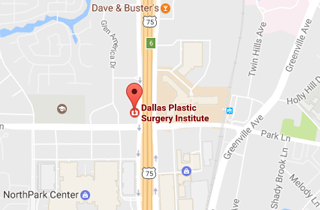
Our Location Dallas Plastic Surgery Institute

9101 N. Central Expwy.
Suite 600, Dallas, TX 75231
Tel: 214-827-2814
Dallas | Dr. Jejurikar

Stay Connected

Ready to get started?
Request a Consult