Rhinoplasty is the most exacting operation in plastic surgery. A few millimeters decide whether a nose looks refined or operated on, and the nose has to work as well as it looks. My goal in every rhinoplasty is the same: a nose that fits your face, breathes well and does not announce that it has been changed.
What Rhinoplasty Can Correct
- A bump or hump on the bridge
- A nose that looks too large or too wide for your face
- A tip that is bulbous, droops or turns down when you smile
- Flaring or wide nostrils
- A crooked nose, including after an injury
- Breathing problems from a deviated septum or collapsed nasal valves, corrected in the same operation
A Nose Designed for Your Face, Not a Template
There is no ideal nose, only the nose that belongs on your face. At your consultation I study your profile, your chin, your lips and the width of your face, because the nose is judged by what surrounds it. I will ask what bothers you and what you want to keep. Most of my patients want to look like themselves with the one thing that always caught their eye quietly fixed. That restraint is the hardest part of the operation and the part I care most about.
Open or Closed Rhinoplasty
I perform both. A closed rhinoplasty hides every incision inside the nostrils and suits hump reduction and modest tip work with a faster early recovery. An open rhinoplasty adds a small incision across the strip of skin between the nostrils, which gives me full view of the tip cartilage and is the better choice for significant tip reshaping, crooked noses, breathing surgery and revisions. The scar fades to a faint line most people cannot find. We will decide together which approach fits your anatomy and goals.
Rhinoplasty Before and After Photos
Two of my patients, each shown from the side and the front. Click any photo to see every angle in the gallery.


Hear Me Talk Rhinoplasty on Beauty and the Beasts
I devoted a full episode of Beauty and the Beasts to rhinoplasty: why it is equal parts art and anatomy, how function and form are balanced, and what a natural result actually means. Pair it with our episode on what to expect from a consultation.
Function Matters as Much as Form
A nose that looks beautiful but does not breathe well is a failed rhinoplasty. When you have a deviated septum, enlarged turbinates or weak nasal valves, I correct them during the same operation. Many patients tell me afterward that breathing better was the change they noticed first.
Rhinoplasty for Men
Men want a strong, straight profile, not a smaller or feminized nose. I keep the bridge higher and the tip less rotated than I would for a woman, and I am conservative with hump reduction so the result reads as masculine. Crooked noses after sports or other injuries are a common reason men come to see me. See the Plastic Surgery for Men page.
What to Expect
Rhinoplasty is an outpatient operation under general anesthesia, usually two to three hours. You will wear a small splint on the bridge for about a week. Bruising under the eyes, if it occurs, fades in seven to ten days, and most patients are back to work and social life within a week to ten days. The shape of the bridge is visible early. The tip takes longer: it will look slightly swollen for several months and continues to refine for a full year. I will see you regularly through that year.
I use a non-opioid pain protocol for rhinoplasty. Most patients need nothing stronger than acetaminophen after the first day or two.
Revision Rhinoplasty
If a prior rhinoplasty left you with a result you do not like, or with breathing that is worse than before, revision is possible. It is more demanding than a first rhinoplasty: there is often less cartilage to work with, scar tissue changes how the skin drapes, and the support structures of the nose may have been weakened. Most revisions require cartilage grafts, taken from the septum, the ear or occasionally a rib, to rebuild that support. I treat every revision individually, and I will be honest with you about what can and cannot be improved.
Common reasons patients come to me for revision include a pinched or over-reduced tip, a scooped bridge, persistent asymmetry or crookedness, visible irregularities and new breathing problems. Because the nose takes a full year to settle, I generally do not recommend revision until at least 12 months after the original surgery.
Functional Nasal Surgery: Breathing Better
Not being able to breathe through your nose disturbs sleep, exercise and daily life. In the same operation as a cosmetic rhinoplasty, or on its own, I correct the structural causes of obstruction:
- Septoplasty straightens a deviated or crooked septum, the wall between the two sides of the nose, that is blocking airflow.
- Turbinate reduction shrinks enlarged turbinates while preserving their natural function, and is often done together with septoplasty.
- Nasal valve repair uses cartilage grafts to open the narrow internal and external valves that collapse on inspiration.
When breathing surgery is medically necessary, that portion is sometimes covered by insurance. Our office will help you understand your options.
Rhinoplasty FAQs
Am I a good candidate for rhinoplasty?
You are a good candidate if you are in good overall health, do not smoke, have realistic goals and your nose has finished growing, usually by 15 to 16 for girls and 17 to 18 for boys.
Can rhinoplasty fix a crooked or off-center nose?
Yes. Straightening a crooked nose, including after an injury, is one of the most common reasons for rhinoplasty, and the deviated septum that usually accompanies it is corrected at the same time.
What is the procedure like?
Rhinoplasty is an outpatient operation performed under general anesthesia or IV sedation at our accredited surgery center. Depending on your anatomy I use an open or closed approach, and you go home the same day with a small splint on the nose.
What is recovery like?
Expect stuffiness, puffiness and some bruising for the first week. The splint comes off at about one week, most patients return to work at that point, and exercise resumes at two to three weeks.
Will I have black eyes?
Some patients bruise, some do not. When it happens it fades within about ten days and is easy to cover.
How long until I see the final result?
You will look good at the splint removal and better each month. The tip is the last area to settle, and the final refined result takes about a year.
Can insurance help?
Cosmetic changes are not covered. When breathing surgery is medically necessary, that portion is sometimes covered. Our office will help you understand your options.
How much does rhinoplasty cost in Dallas?
Cost depends on the complexity of the surgery, whether it is a primary or revision procedure, and whether functional work is included. You will receive a personalized quote at your consultation.
Rhinoplasty Patient Reviews


Recognition
Newsweek has named Dr. Jejurikar one of America’s Best Plastic Surgeons for five consecutive years. He has been named to D Magazine’s Best Doctors in Dallas and Texas Monthly Super Doctors for many years running.
Schedule Your Rhinoplasty Consultation in Dallas
If you have thought about changing your nose, I would like to examine you and talk through what is possible. Call 214-827-2814 or request a consultation online.
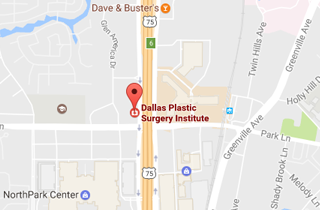
Dallas Plastic Surgery Institute
9101 N. Central Expressway, Suite 600
Dallas, TX 75231
Tel: 214-827-2814