If your breasts are too large for your frame, you already know what it costs you: neck, shoulder and back pain, grooves from bra straps, rashes under the breasts, trouble exercising, and clothes that never fit. Breast reduction surgery removes excess breast tissue and skin, lifts the breast and reshapes it into a size that fits the rest of your body. It is one of the most consistently life-changing operations I perform. Patients tell me the pain is gone before they have even healed, and that they wish they had done it years earlier.
A Breast Reduction Planned Around You
There is no single breast reduction technique that is right for every woman. The way I move the nipple, which tissue I keep and how I shape what remains depends on how large your breasts are, how far the nipple has dropped, the quality of your skin and the result you want. At your consultation I examine you, listen to how you want to look and feel, and then choose the approach that fits. I do not fit patients to a technique.
How I Perform Breast Reduction
In every breast reduction the nipple and areola stay attached to a pedicle, a bridge of living breast tissue that carries their blood supply and nerves. Choosing the right pedicle is the heart of the operation, because it determines the shape, the projection, and how well sensation and blood flow are preserved. I use all of the established pedicle techniques and select among them for each patient:
| Pedicle | What it does well | When I tend to use it |
|---|---|---|
| Superomedial | Keeps fullness in the upper and inner breast for a youthful, projecting shape; reliable sensation | Most moderate to large reductions, my most common choice |
| Medial | Preserves cleavage fullness with a short, well-vascularized pedicle | Moderate reductions where inner fullness matters most |
| Superior | Upper pole fullness with minimal tissue to rotate | Smaller reductions and lifts with a modest volume change |
| Inferior | Very safe blood supply even when the nipple must travel a long way | Very large reductions and some patients who hope to breastfeed |
| Central mound | Keeps the nipple on a central core of tissue and allows flexible skin tailoring | Patients with significant asymmetry or unusual breast shapes |
The skin incision is planned separately from the pedicle. Most of my reductions use a vertical (lollipop) pattern, around the areola and straight down to the crease, which gives a tighter, more conical shape and less scar. For very large or very low breasts I add an incision along the crease (the anchor pattern) so the skin fits the new breast without excess. Where the breast tissue extends toward the armpit, I add liposuction to the side of the chest so the result looks smooth in a bra and a swimsuit. Scars fade substantially over the first year and sit where a bra or bikini top covers them.
Breast Reduction Before and After Photos
Two of my patients. Click any photo to see every angle in the gallery.


Hear Me Talk Breast Surgery on Beauty and the Beasts
On the Beauty and the Beasts podcast, Dr. Sal Pacella and I talk through what women are really asking for when they want smaller, lighter breasts, how a reduction compares with downsizing implants, and how breast surgery fits into a mommy makeover.
Am I a Candidate for Breast Reduction Surgery?
You are likely a good candidate if your breasts are large and heavy for your frame, you have neck, shoulder or back pain, skin irritation under the breasts or grooving from bra straps, you are in good general health and do not smoke, and your weight is stable. Breast reduction can be performed at almost any adult age. If you are still losing weight or taking a GLP-1 medication, we will time surgery for when your weight has settled so the result lasts. Teenagers with very large breasts can be candidates once breast growth is complete.
I perform breast reduction as a self-pay cosmetic procedure and do not work with insurance. That lets me plan the operation entirely around the size and shape you want rather than around an insurer’s minimum tissue requirement. My office will give you a complete quote at your consultation.
What to Expect
Breast reduction is an outpatient operation under general anesthesia, usually two and a half to three and a half hours. You go home the same day in a soft surgical bra, and drains are rarely needed. Most patients are off prescription pain medicine within a few days, back to desk work in about a week, and back to full exercise at four to six weeks. The breasts sit high and feel firm at first and settle into their final shape over three to six months. Relief from neck and shoulder pain is usually immediate.
I use a non-opioid pain protocol, so most patients manage comfortably without narcotics, and I offer hyperbaric oxygen therapy at Foundry Hyperbaric and Wellness to speed healing in the first weeks.
Reduction, Lift, or Both?
- Breast reduction when the breasts are too large and too low. Every reduction includes a lift.
- Breast lift when you are happy with your size and want the breasts higher and firmer.
- Lift with a small reduction when the breasts are a little heavy but mostly low. Removing a modest amount of tissue lightens them and the lift reshapes what remains.
- Reduction with fat grafting when you want a smaller breast that still has upper fullness. Fat from liposuction can be grafted to the upper breast in the same operation.
Breast Reduction FAQs
How much smaller will my breasts be? That is your decision, made with me at your consultation. Most patients go down two to three cup sizes. I can show you results from patients with a similar starting point so we agree on the target before surgery.
Will I lose nipple sensation? Temporary changes are common and most sensation returns over several months. Keeping the nipple on a well-designed pedicle is the best protection, and permanent loss is uncommon with the techniques I use.
Can I breastfeed after a breast reduction? Many women can, but it cannot be guaranteed, because some milk ducts are removed. If breastfeeding is important to you, tell me at your consultation and I will choose a pedicle that preserves as much duct tissue as possible.
What will the scars look like? A scar around the areola and a vertical scar to the crease, with a scar along the crease for larger reductions. They are red and firm for the first few months and fade to thin, pale lines over a year. They sit where a bra or bikini top covers them.
Will the breasts grow back? Not unless you gain significant weight, become pregnant or take hormones. The tissue that is removed is gone for good.
Can breast reduction be part of a mommy makeover? Yes. Reduction with a tummy tuck and liposuction is a common combination. See the Mommy Makeover page.
Do you perform breast reduction for men? Yes. See the Gynecomastia page.
Breast Reduction Patient Reviews


Recognition
Newsweek has named Dr. Jejurikar one of America’s Best Plastic Surgeons for five consecutive years. He has been named to D Magazine’s Best Doctors in Dallas and Texas Monthly Super Doctors for many years running.
Schedule Your Breast Reduction Consultation in Dallas
If your breasts are a burden, I would like to examine you and show you what is possible. Call 214-827-2814 or request a consultation online.
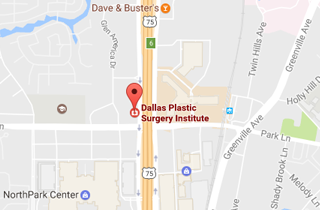
Dallas Plastic Surgery Institute
9101 N. Central Expressway, Suite 600
Dallas, TX 75231
Tel: 214-827-2814