After more than twenty years as a board-certified plastic surgeon in Dallas, I can usually predict the first few questions in a consultation before the patient sits down. Most of them are built on myths: things a friend said, something from a reality show, or a social media post filmed in a country with different rules than ours. Some of these myths talk people out of surgery that would have helped them. Others talk people into surgery they should not have. Here are the eight I hear most often, and what is actually true.
Myth 1: Recovery is long and painful
This was closer to true twenty years ago. Today, with long-acting local anesthetic placed during surgery and a scheduled combination of non-opioid medications, most of my patients manage comfortably with minimal narcotic usage, including after a tummy tuck. Breast augmentation patients are usually back to desk work within three to five days, and patients who choose Preservé, the minimally invasive technique with a 3 cm incision and no muscle cut, are often back in one to three. I also offer hyperbaric oxygen therapy at Foundry to reduce swelling in the first weeks. Recovery is real, but it is measured in days, not months.
Myth 2: You will have obvious scars
Every incision leaves a scar. The skill is in where it goes and how it is closed. A breast augmentation scar sits in the crease under the breast and is about 3 to 5 cm long. A tummy tuck scar is designed to sit below the line of your underwear. Liposuction incisions are a few millimeters and fade to small dots. I close every incision in layers with absorbable sutures and start a scar protocol in the office once the skin has healed. Scars fade from pink toward skin color over the first year; what you see at six weeks is not the final result. If you want to know what a mature scar looks like, my before and after gallery shows patients at six months and beyond.
Myth 3: Results look fake or overdone
Overdone results exist, and they are the ones you notice. The result that looks like a person who slept well and got lucky with genetics does not register as surgery at all. The way I avoid the overdone look is by measuring. An implant is chosen by the width of your chest, not a cup size; a facelift is planned around the way your face has actually aged, not a template. The FDA approved 28 new smaller Motiva implant sizes this month, down to 105 cc, precisely because so many patients want a result that is proportionate rather than noticeable.
Myth 4: Liposuction is a way to lose weight
Liposuction removes fat. It does not remove loose skin, it does not repair separated abdominal muscles, and it does not make the scale move much. A patient who has five liters of fat removed in a session loses a few pounds and several inches. If your skin is loose or your belly bulges when you sit up, a tummy tuck is the right operation, and I will tell you that rather than perform the wrong one. Many of my patients now arrive after losing weight on a GLP-1 medication, and liposuction is excellent for the pockets that remain, as long as the weight has been stable for three months.
Myth 5: Fat comes back somewhere else
The fat cells I remove are gone. The fat cells that remain, everywhere in your body, can still enlarge if you gain weight, which is the only way fat “comes back.” Keep your weight stable and a well-planned result lasts for years; I have Lipo 360 patients in my gallery photographed at eighteen months who look exactly as they did at six months.
Myth 6: Plastic surgery is for women
Roughly one in five of my patients is a man. The most common requests are gynecomastia correction, high-definition liposuction of the abdomen and flanks, rhinoplasty, and eyelid surgery and facelifts for men who feel they look more tired than they are. The goals are different, and so is the planning: a male facelift is designed around different incision placement and a different jawline than a female one. I talk about this at length on an episode of my podcast, Beauty and the Beasts, called “What Men Really Want.”
Myth 7: You are too old for surgery
What matters is your health, not your birthday. I perform facelifts, eyelid surgery and breast surgery on patients in their sixties and seventies regularly, and some of my happiest patients are the ones who waited until they had the time to recover properly. The honest caveat is skin quality: as we age, skin loses elasticity, so an operation that removes skin may give a better result than one that only tightens it. That is a conversation for the consultation, not a reason to stay home.
Myth 8: Any doctor with a scalpel can do this
Any licensed physician in Texas can legally perform cosmetic surgery. That is not the same as being trained to. A board-certified plastic surgeon, certified by the American Board of Plastic Surgery, has completed a surgical residency specifically in plastic surgery, operates in an accredited facility with a board-certified anesthesiologist, and carries hospital privileges for the procedures they perform. I have practiced in Dallas for more than twenty years, serve as president of the Dallas Plastic Surgery Institute, and review research for the specialty’s leading journal. When a quote seems too good to be true, the thing missing from it is usually one of those credentials.
Talk to a board-certified plastic surgeon in Dallas, TX
The best way to replace a myth with a fact is a consultation. I will examine you, measure, show you results from patients who started where you are, and tell you honestly which operation, if any, will get you what you want. Call 214-827-2814 or request a consultation online.
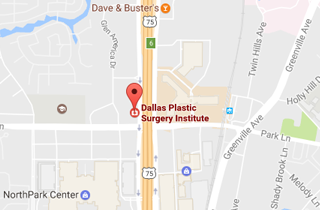
Dr. Sam Jejurikar is a board-certified plastic surgeon at Dallas Plastic Surgery Institute, 9101 N. Central Expressway, Suite 600, Dallas, TX 75231. This article is for education only and is not a substitute for a consultation. Individual results vary.